In this guide
What's in the GLOW peptide
Three peptides for skin & recovery
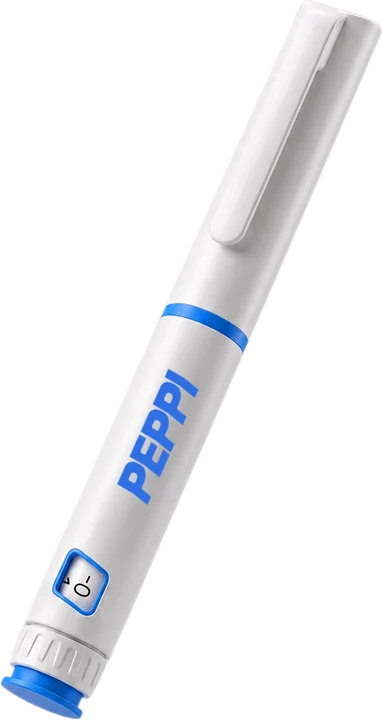
The GLOW peptide is a three-peptide blend: 10 mg of BPC-157, 10 mg of TB-500 and 50 mg of GHK-Cu in one pre-filled pen. KLOW holds those same three in the same amounts and adds one more, 10 mg of KPV.
GLOW for skin and recovery, KLOW if you want KPV added
A licensed clinician can help you pick based on your goals and health history.
- Both pens hold 10 mg BPC‑157, 10 mg TB‑500 and 50 mg GHK‑Cu
- KLOW adds 10 mg of KPV, a tripeptide taken from alpha‑MSH
- KPV research so far is mostly in mice and cell cultures
- First month: $224 for KLOW, $189 for GLOW
10mg
of KPV, the one ingredient KLOW adds
3 peptides vs 4
No study has compared the two blends head to head. The table lays out what is actually different, from ingredients to price.
| Feature | GLOW | KLOW |
|---|---|---|
| Peptides | BPC‑157, TB‑500 and GHK‑Cu | BPC‑157, TB‑500, GHK‑Cu and KPV |
| Amount in each pen | 10 mg, 10 mg and 50 mg | The same three, plus 10 mg of KPV |
| What Peppi says it may support | Skin renewal and collagen, tissue repair and recovery, healthy aging and inflammatory response | Advanced skin renewal, advanced tissue repair, inflammatory response and healthy aging |
| First month on subscription | $189 | $224 |
| Renews every 28 days | $303 | $359 |
| One-time purchase | $379 | $449 |
| Peppi pairs it with | Tesamorelin | MOTS‑c |
The GLOW peptide benefits Peppi lists fall into three groups: skin renewal and collagen support, tissue repair and recovery, and healthy aging and inflammatory response. In Peppi's words, GLOW “combines GHK-Cu with recovery-focused peptides to support collagen production, skin renewal, and tissue health.”
GHK-Cu carries the skin side of the blend. BPC-157 and TB-500 carry the recovery side. Plans and pricing are on the page for the GLOW peptide pen.
What's in the KLOW peptide
GLOW's base plus KPV
The KLOW peptide is a four-peptide blend: GLOW's three peptides at the same strengths, with 10 mg of KPV added.
- BPC-157, 10 mg: designed to support tissue repair, gut health and inflammatory response
- TB-500, 10 mg: a lab-made peptide modeled on part of thymosin beta 4
- GHK-Cu, 50 mg: a naturally occurring copper peptide studied for collagen and skin renewal
- KPV, 10 mg: a three-amino-acid peptide studied for anti-inflammatory effects
Peppi describes the result as “a multi-peptide approach designed to support collagen, skin remodeling, and the body’s natural regenerative processes.” Every KLOW blend peptide pen is a one-month supply, filled by a named U.S. pharmacy once a licensed clinician approves your prescription. You can see plans on Peppi's KLOW pen page.
What KPV peptide adds
A tiny piece of alpha-MSH
KPV peptide is the only ingredient that separates KLOW from GLOW, and its research centers on inflammation, mostly in the guts of mice.
So, what is KPV peptide? It is three amino acids long (lysine, proline and valine), taken from the tail end of alpha-melanocyte-stimulating hormone, or alpha-MSH.
A 2008 review in Endocrine Reviews explains why researchers singled it out. Alpha-MSH has anti-inflammatory effects but also affects skin pigment. KPV appears to keep the anti-inflammatory effect without the pigment effect.
One KPV anti-inflammatory colitis study, published in 2016 in Cellular and Molecular Gastroenterology and Hepatology, gave mice KPV in their drinking water during chemically induced colitis. Compared with mice that got no KPV, the treated mice showed:
- Less inflammation in the colon
- Less cellular infiltration into colon tissue, seen under the microscope
- Fewer dividing cells in the colon lining, measured with the Ki67 marker
- Lower lipocalin-2, an inflammation marker, in a second mouse model
The PepT1 link comes from a 2008 study in Gastroenterology led by the same senior researcher. In human gut and immune cells in the lab, KPV was carried in by PepT1, a transporter for small peptides, and dampened NF-kappaB, a key inflammation switch.
Cells and mice are a long way from you. These mice drank their KPV, while KLOW is an injectable pen, and the 2016 authors wrote that more studies are needed to test whether KPV could benefit people with the colon disease they modeled.
GLOW vs KLOW for skin
Same copper peptide in both pens
For skin, GLOW vs KLOW is a closer call than the names suggest. Both pens carry the same 50 mg of GHK-Cu, the copper peptide at the center of the skin side of each blend.
GHK occurs naturally in human blood. A 2020 review in Aging Pathobiology and Therapeutics puts plasma levels at about 200 ng/mL at age 20, falling to 80 ng/mL by age 60.
A 2015 review in BioMed Research International describes placebo-controlled studies of GHK-Cu creams in women around age 50. In one, a facial cream reduced visible signs of aging over 12 weeks in 71 women with mild to advanced sun damage. Those were creams on the skin, not injections, so treat them as a pointer and not proof for a pen.
KPV's skin case is thinner. The 2008 Endocrine Reviews paper lists inflammatory skin disease among possible future uses for KPV and a related tripeptide. It also notes that alpha-MSH, the hormone KPV comes from, showed anti-inflammatory effects in animal models of contact dermatitis.
Featured pen
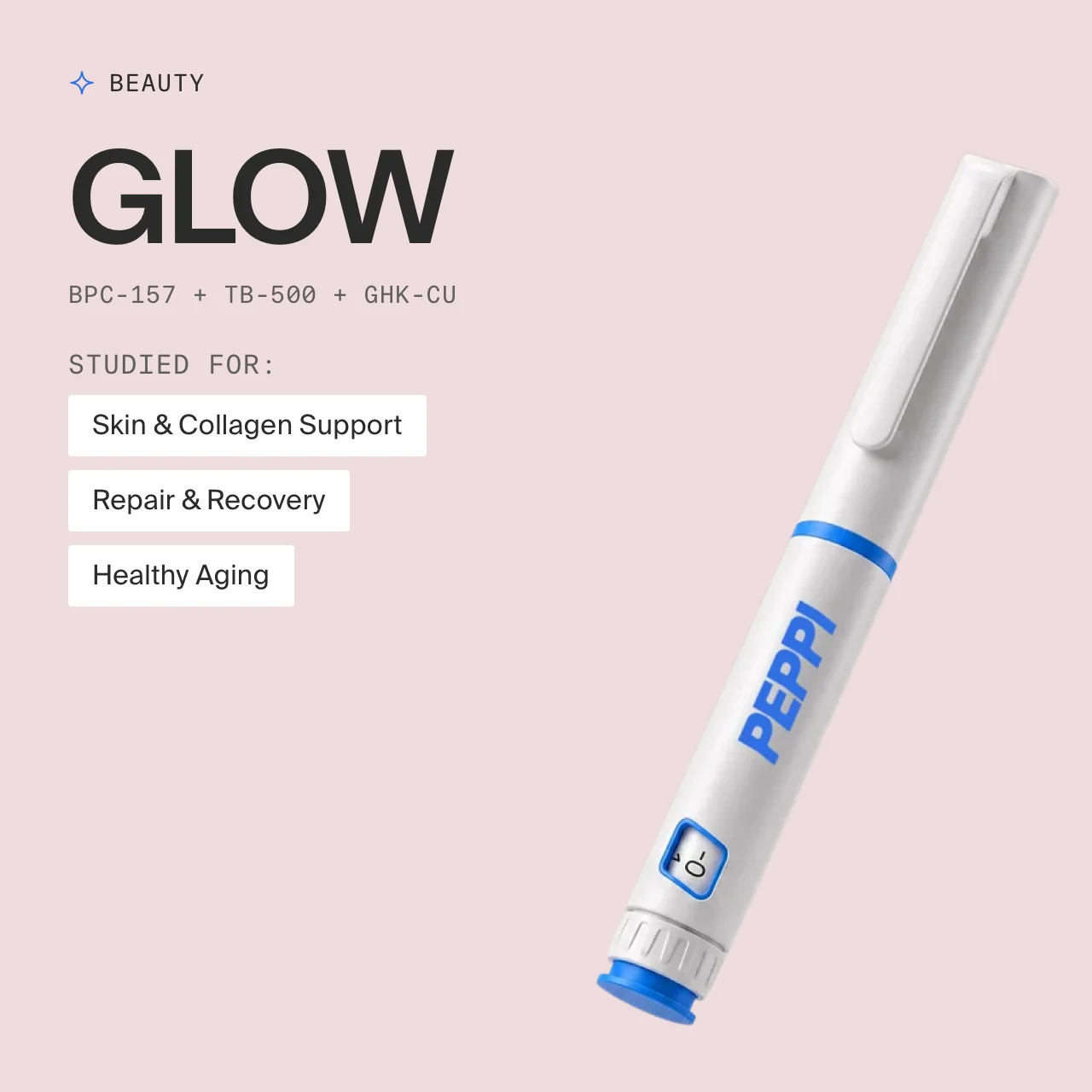
GLOW
GLOW pairs 50 mg of GHK-Cu with 10 mg each of BPC-157 and TB-500, designed to support skin renewal, collagen production and recovery.
$379 $189 first month 50% off
Emily C., a verified buyer, put it this way: “I tried Glow to improv my skin, and after a few weeks it definitely looked more hydrated and less wrinkly. I also felt like I bounced back a little better after workouts. I’m a big fan of the product.”
If skin is your only goal, one peptide may do. Peppi's GHK-Cu pen holds 50 mg of GHK-Cu alone, at $149 for the first month on subscription.
KLOW peptide benefits for recovery
Where KPV meets repair
For recovery, KLOW peptide benefits rest on the same BPC-157 and TB-500 base as GLOW. KPV is the only addition, and its research so far centers on inflammation.
Be clear on the evidence. A 2025 systematic review in HSS Journal reviewed 36 BPC-157 studies from a sports medicine angle, and 35 of them were preclinical, meaning animal or lab work. It found no clinical safety data for people. TB-500 research also traces mostly to cell and animal studies of thymosin beta 4.
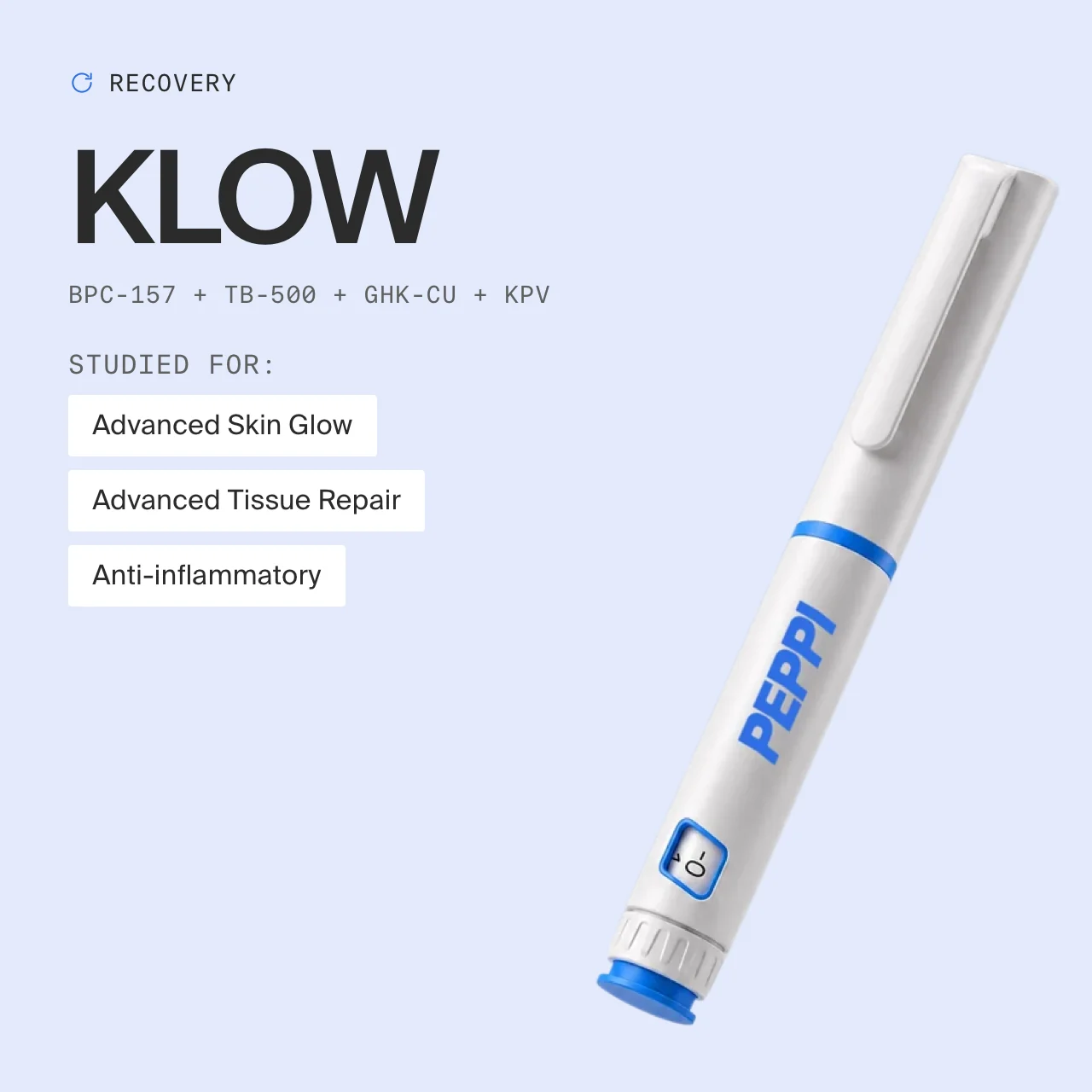
Featured pen
KLOW
KLOW holds 10 mg of BPC-157, 10 mg of TB-500, 50 mg of GHK-Cu and 10 mg of KPV, designed to support skin renewal, tissue repair and a healthy inflammatory response.
$449 $224 first month 50% off
Mike R., a verified buyer, shared this: “I switched to KLOW after a minor injury when my recovery felt like it was stalling out. My joints definitely feel less stiff when I wake up, and I actually have a spring in my step again. It’s been a staple in my routine since.” One person's experience is not a study, and results vary.
Which blend fits your goals
Match the pen to the goal
In a KLOW vs GLOW peptide decision, start with your main goal. Skin first with recovery second points to GLOW, and wanting KPV added for its inflammation research points to KLOW.
GLOW fits if
- Skin and collagen are your main focus
- You want recovery support from the same pen
- You'd rather start with three peptides at $189 for the first month
KLOW fits if
- You want KPV and inflammatory response support
- Tissue repair matters as much as skin
- Your clinician suggests the four‑peptide formula
The GLOW vs KLOW peptide choice doesn't change how either pen is made. Accumark Labs and Atlas Analytics test every batch for potency, sterility, pH and endotoxins. Look up Peppi's batch test results with the lot number on your pen label.
Still deciding between GLOW and KLOW?
Take the quizDosing GLOW & KLOW
Fixed pen, personal dose
There's no standard GLOW peptide dosage to copy, and the same goes for KLOW peptide dosage. A licensed clinician sets your dose after reviewing your intake and personalizes it from day one.
What is fixed is what's in the pen. GLOW holds 10 mg of BPC-157, 10 mg of TB-500 and 50 mg of GHK-Cu, and KLOW holds the same plus 10 mg of KPV. You take each dose with a twist-to-dose selector, so there are no vials to mix or measure.
Each pen is a one-month supply, refilled every 28 days. Peppi notes that peptide therapy is cumulative and recommends committing 4-6 months for results to build.
You meet with your prescribing clinician at least once every six months, and you can message or video call your care team as often as you need.
Questions about GLOW & KLOW
Frequently asked questions
Quick answers on strength, GHK-Cu and switching pens.
Is KLOW Stronger Than GLOW?
KLOW is broader, with the same amounts of the shared peptides. Both pens hold 10 mg of BPC-157, 10 mg of TB-500 and 50 mg of GHK-Cu. KLOW adds 10 mg of KPV, a peptide studied for inflammation. No study has compared the two blends head to head, so a clinician can help you decide whether the extra peptide fits your goals.
Does KLOW Have GHK-Cu?
Yes. KLOW contains 50 mg of GHK-Cu, the same amount as GLOW, alongside 10 mg each of BPC-157, TB-500 and KPV. GHK-Cu is a naturally occurring copper peptide studied for its role in collagen production and skin renewal, and it is the main skin-focused ingredient in both pens.
Can You Switch From GLOW to KLOW?
Yes, with your care team's input. Your plan can be adjusted at each 28-day refill, and your clinician decides whether KLOW suits your health history. Because the three base peptides are the same, the main change is the added KPV. Your monthly renewal price moves from $303 to $359.
*These statements have not been evaluated by the Food and Drug Administration. Peppi peptides are dispensed only with a prescription.