
In this guide
BPC-157 vs TB-500 at a glance
Two peptides, two research paths
BPC-157 is a 15-amino-acid peptide based on a compound in gastric juice. TB-500 is a lab-made peptide tied to thymosin beta 4, a protein found in nearly every cell type.
Most of what's known about both comes from animal and cell studies. That makes any BPC 157 vs TB 500 comparison (or TB 500 vs BPC 157, if you searched it the other way) a look at early research.
BPC-157 alone for a focused start, Wolverine for both peptides together
Your clinician can help you choose based on your goals and health history.
- BPC‑157 has been studied in tendon, ligament, muscle and gut models
- TB‑500 is tied to thymosin beta 4 and cell migration research
- Wolverine holds 10 mg of each in one twist‑to‑dose pen
- Both are on the 2026 WADA Prohibited List
10mg
of each peptide per Wolverine pen
BPC-157 & TB-500
Neither peptide has enough human research to name a winner. The table below shows where they differ, from origin to evidence stage to which Peppi pens contain them.
| Feature | BPC-157 | TB-500 |
|---|---|---|
| Origin | Based on a peptide found in gastric juice, first described in 1992 | Based on thymosin beta 4, described in a 2012 doping study as a veterinary preparation |
| What it is | A 15‑amino‑acid peptide | A synthetic copy of a 7‑amino‑acid active region of thymosin beta 4 |
| Main research focus | Tendon, ligament, muscle, bone and gut lining | Cell migration, actin binding and corneal repair |
| Evidence stage | 35 of 36 studies in a 2025 orthopedic review were preclinical | Mostly cell and animal studies of thymosin beta 4 |
| WADA 2026 status | Prohibited at all times (S0) | Prohibited at all times (S2.3) |
| Peppi pens that contain it | BPC‑157, Wolverine, KLOW, GLOW | Wolverine, KLOW, GLOW |
Every batch of a Peppi pen is tested by an independent lab for potency, sterility, pH and endotoxins before it ships. You can look up Peppi's batch test results by the lot number printed on your pen label.
What BPC-157 does
Studied for tendon & gut repair
BPC-157 is being studied for its potential role in tissue repair, mostly in tendons, ligaments, muscle and the gut lining. Nearly all of that research has been done in animals and cell cultures.
So, what is BPC 157? The name stands for body protection compound 157. Researchers first described it in 1992 as a peptide found naturally in gastric juice, where it helps keep the stomach lining intact.
A 2025 systematic review in HSS Journal screened 544 papers and kept 36 that looked at BPC-157 in muscle, tendon, ligament or bone. Thirty-five were preclinical. The BPC 157 benefits it describes come from animal models like these:
- Rat Achilles tendons: better structure, function and strength measures after the tendon was cut
- Rat knee ligaments: less instability and stiffness after a medial collateral ligament injury
- Rat muscle: higher load to failure and better motor function after crush and cut injuries
- Rabbit bone: one study linked it to fracture repair in a nonunion model
The proposed mechanisms include new blood vessel growth through VEGF signaling, nitric oxide pathways and more growth hormone receptors on tendon cells.
Human data is thin. The review's only clinical study was a retrospective report in which 7 of 12 people with chronic knee pain said relief lasted more than six months after a knee injection. No study in the review looked at BPC-157 safety in people.
What TB-500 does
A small piece of a bigger protein
TB-500 is a synthetic peptide modeled on the active region of thymosin beta 4, a 43-amino-acid protein found in every cell type except red blood cells.
A 2012 doping-control study from the Hong Kong Jockey Club describes TB-500 as a veterinary preparation. Its key ingredient is a synthetic version of LKKTETQ, the seven-amino-acid stretch of thymosin beta 4 that researchers link to actin binding and cell migration, with an acetyl group added to one end.
Most claimed TB 500 benefits trace back to research on the full protein. A 2007 corneal wound healing study review in Clinical Ophthalmology rounds up the cell, rat and mouse work.
In mice with alkali burns to the eye, 70% of untreated eyes had bleeding inside the eye and a fully clouded cornea, compared with 20% of eyes given thymosin beta 4. In cell studies, the protein encouraged cells to migrate without speeding up cell division, and it showed anti-inflammatory effects.
Those experiments studied thymosin beta 4 itself, and the review noted that well-controlled human trials were still being planned in 2007. Read them as early signals about the parent protein.
Why the Wolverine stack pairs them
Two research paths, one pen
The Wolverine stack pairs BPC-157 and TB-500 because both are being studied for their potential roles in tissue repair, each through a different proposed mechanism. BPC-157 research points to blood vessel growth and tendon cell signaling, while TB-500 traces back to the actin binding and cell migration work on thymosin beta 4.
That's the thinking behind a BPC 157 TB 500 stack. In practice, it also means one pre-filled pen and one clinician's plan in place of two separate prescriptions.
Featured pen
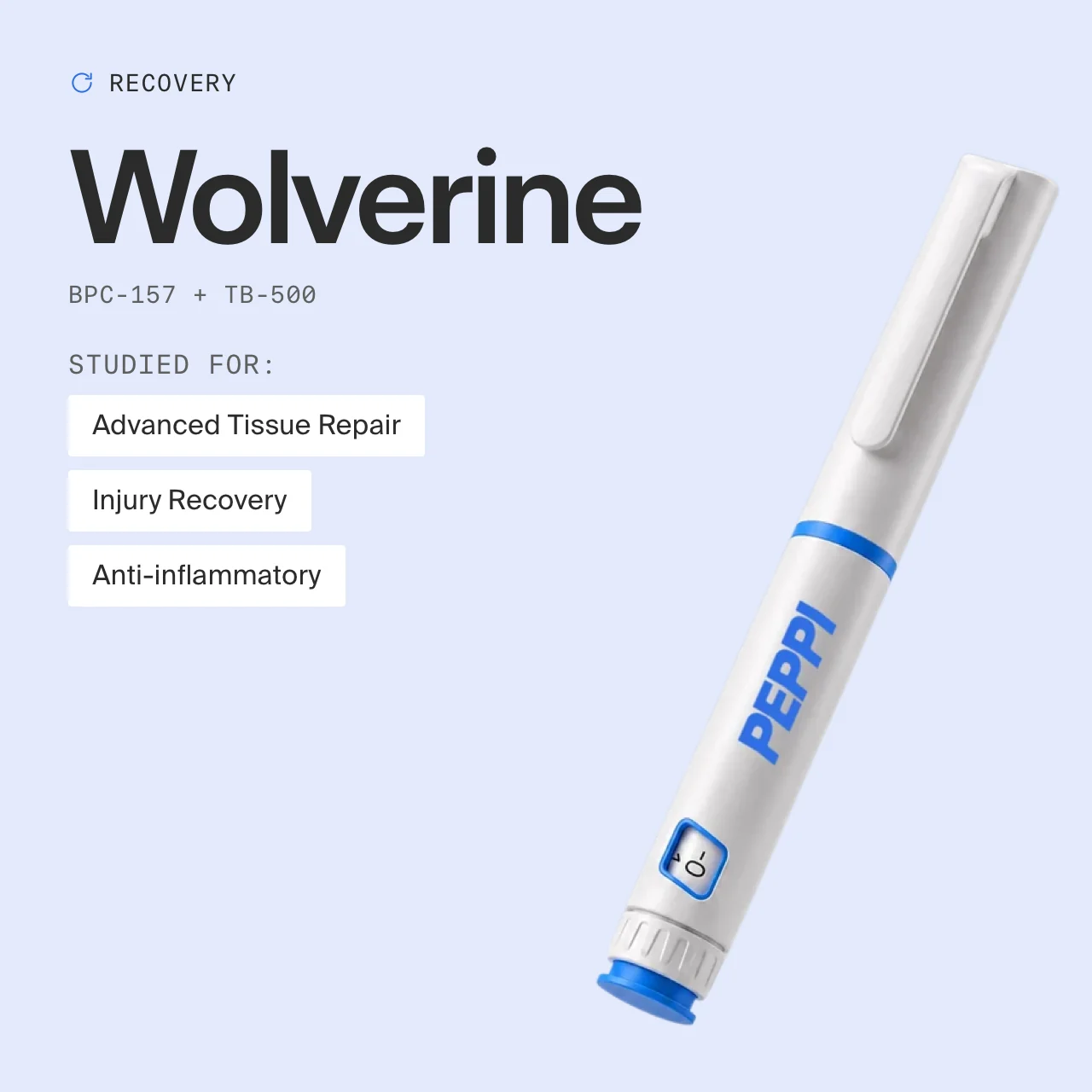
Wolverine
Wolverine holds 10 mg of BPC-157 and 10 mg of TB-500 in one pre-filled pen, designed to support advanced tissue repair, injury recovery and a healthy inflammatory response.
$379 $189 first month 50% off
Direct research on the combination is limited. A 2026 rat study of Achilles tendon repair compared BPC-157, TB-500 and both together in 32 rats over four weeks. Both peptides were linked to better tendon structure (BPC-157's gains did not reach statistical significance), only the TB-500 group showed a significant gain in strength, and the combination added no benefit over either peptide on its own.
The authors called their work exploratory and said longer studies are needed. It's a fair point to raise with your clinician when you weigh Wolverine against a single peptide.
Jason B., a verified buyer, described his experience this way: “I started Wolverine because I had a few nagging things that just weren’t getting better. It wasn’t some overnight change, but after a few weeks I felt less beat up and could train more consistently again. The pen was also way easier than I expected.” Full pricing and plan options are on the page for the Wolverine stack pen.
If skin is part of your goal too, Peppi's KLOW pen keeps the same 10 mg of BPC-157 and 10 mg of TB-500 and adds GHK-Cu (50 mg) and KPV (10 mg).
Dosing BPC-157 & TB-500 together
Your clinician sets the dose
Your dose of a BPC 157 TB 500 blend is set by a licensed clinician after your intake, so there's no standard number to copy from a forum or a chart.
- In the pen: 10 mg of BPC-157 and 10 mg of TB-500 per Wolverine pen
- Your dose: personalized by a licensed clinician from day one
- Taking it: a twist-to-dose selector, with no mixing or measuring from vials
- Supply: one pen is a one-month supply, refilled every 28 days
- Support: unlimited video calls and messaging with your care team
Peppi's note on timing is direct: peptide therapy is cumulative, and Peppi recommends committing 4-6 months for results to build. Response varies from person to person, and your care team can adjust your plan along the way.
When one BPC-157 peptide is enough
Sometimes one peptide is the plan
A single BPC 157 peptide can be enough when your goals match what it's designed to support: tissue and tendon repair, gut health and a healthy inflammatory response. Starting with one compound also keeps your protocol simple.
BPC-157 alone fits if
- Your goals center on tendon, tissue or gut support
- You'd like to start with a single peptide
- You want the lower price ($149 first month on subscription)
Wolverine fits if
- You want BPC‑157 and TB‑500 in one pen
- Your clinician suggests a broader recovery protocol
- You'd rather not manage two prescriptions
Peppi's BPC-157 pen holds 10 mg of BPC-157 and comes with the same clinician review, twist-to-dose pen and 28-day refills as Wolverine. If you start there, you can ask your care team about adding TB-500 later.
Featured pen
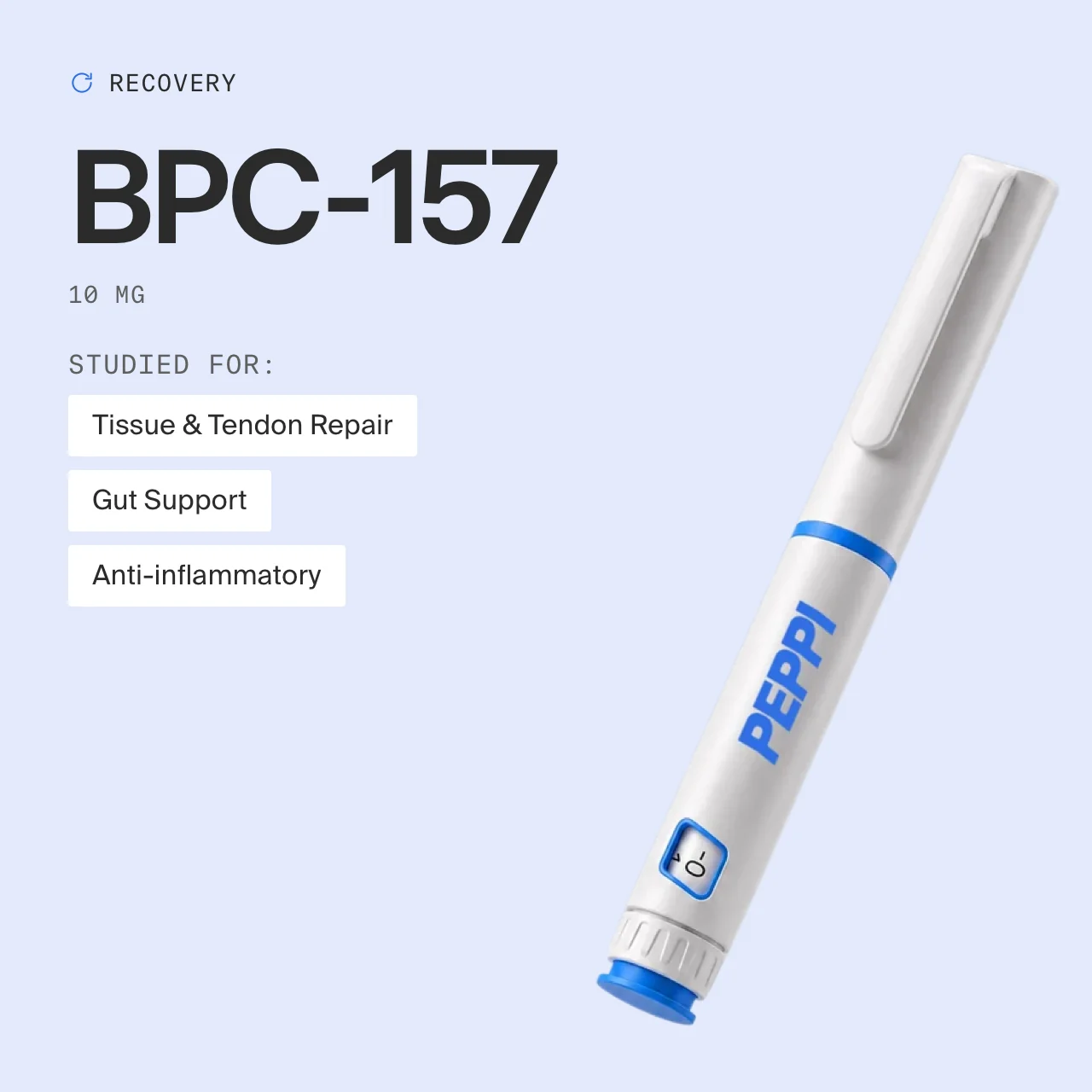
BPC-157
A recovery-focused pen with 10 mg of BPC-157, designed to support the body's natural tissue repair, gut health and inflammatory response.
$299 $149 first month 50% off
Seth G., a verified buyer, shared this about BPC-157: “I tried BPC-157 during a frustrating stretch where recovery after workouts was taking forever. I started waking up less sore and then I slowly got more comfortable training again. It was simple to use and didn’t take over my whole routine.”
Not sure if BPC-157 or Wolverine fits your goals?
Take the quizQuestions about BPC-157 & TB-500
Frequently asked questions
Short answers on tendons, stacking and what TB-500 actually is.
Is BPC-157 or TB-500 Better for Tendons?
There's no clear answer for people yet. Both have rat tendon research behind them. BPC-157 has several Achilles tendon studies in rats, and in a 2026 rat study, TB-500 showed a significant strength gain at four weeks while BPC-157 trended better without reaching significance. Animal results don't always carry over to people, so talk through your goals with a clinician.
Can You Take BPC-157 & TB-500 Together?
Yes, a clinician can prescribe them together, and Peppi's Wolverine pen combines 10 mg of each. A licensed clinician reviews your intake before anything ships and sets your dose. Research on the pairing is limited, and one 2026 rat study found the combination added no benefit over either peptide alone. If you compete in tested sport, both are on the WADA Prohibited List.
What Is TB-500 Made From?
TB-500 is made in a lab. Doping-control researchers identified its key ingredient as a synthetic copy of LKKTETQ, the section of thymosin beta 4 at amino acids 17 to 23, with an acetyl group added to one end. Thymosin beta 4 itself is a 43-amino-acid protein first isolated from bovine thymus. At least one recent paper uses the name TB-500 for synthetic thymosin beta 4 as a whole.
*These statements have not been evaluated by the Food and Drug Administration. Peppi peptides are dispensed only with a prescription.