In this guide
How peptides help joint pain
Repair signals, not painkillers
The best peptides for joint pain aren't painkillers. They're signals being studied for how they may support tissue repair and a healthy inflammatory response.
Peptides are short chains of amino acids that bind to specific receptors on your cells and prompt processes your body already runs. Most peptides for joint pain fit one of three groups. BPC-157 and TB-500 are studied mainly in rat injury models, KPV is studied for inflammation, and CJC-1295 with ipamorelin is designed to raise your own growth hormone, which is tied to collagen production in tendon. None of them is FDA-approved for any joint condition.
Evidence is the catch. A 2025 systematic review of BPC-157 in sports medicine counted 35 preclinical studies and just one small clinical study, and the other peptides here have even less joint-specific research.
Quality matters too. You can look up Peppi's batch test results by the lot number on your pen.
The short answer
BPC-157 and TB-500, paired in the Wolverine stack, have been tested directly in tendon or ligament injury models, almost all of them in rats. KPV and CJC-1295 with ipamorelin are indirect picks with no joint studies of their own. Find out what's causing your pain first.
- Number 1.
BPC-157 for joints & tendons
The most-studied repair peptide
$299$149 first month 50% offBPC-157 opens this list because its research covers muscle, tendon, ligament and bone injuries, though nearly all of it comes from rats and cell cultures. It's a 15-amino-acid peptide first found in gastric juice.
Most BPC 157 benefits you'll read about trace back to those animal injury models. A 2025 systematic review found BPC-157 improved functional, structural and biomechanical outcomes in animal muscle, tendon, ligament and bone injuries. The same review found no clinical safety data in people.
A 2014 BPC 157 tendon fibroblast study offers one possible mechanism. In tendon cells taken from rats, BPC-157 raised growth hormone receptor levels up to sevenfold by day three, and adding growth hormone then increased cell growth. That happened in a lab dish, not a knee.
Human data on BPC 157 for joint pain comes down to one 2021 retrospective chart review from a single clinic. Of 12 people given BPC-157 alone as a knee injection, 11 said their pain improved, but there was no control group, and a 2026 review of the human evidence rated it poor quality.
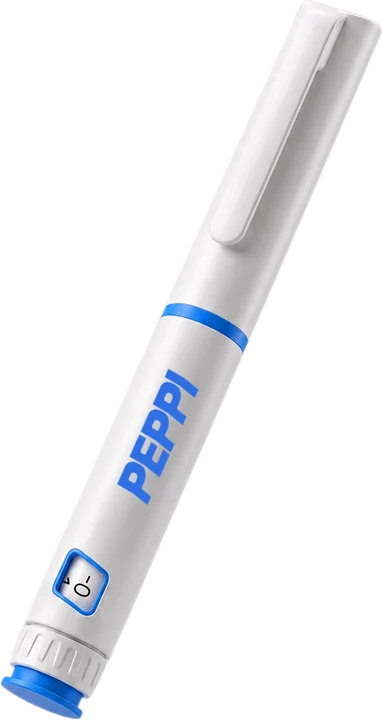
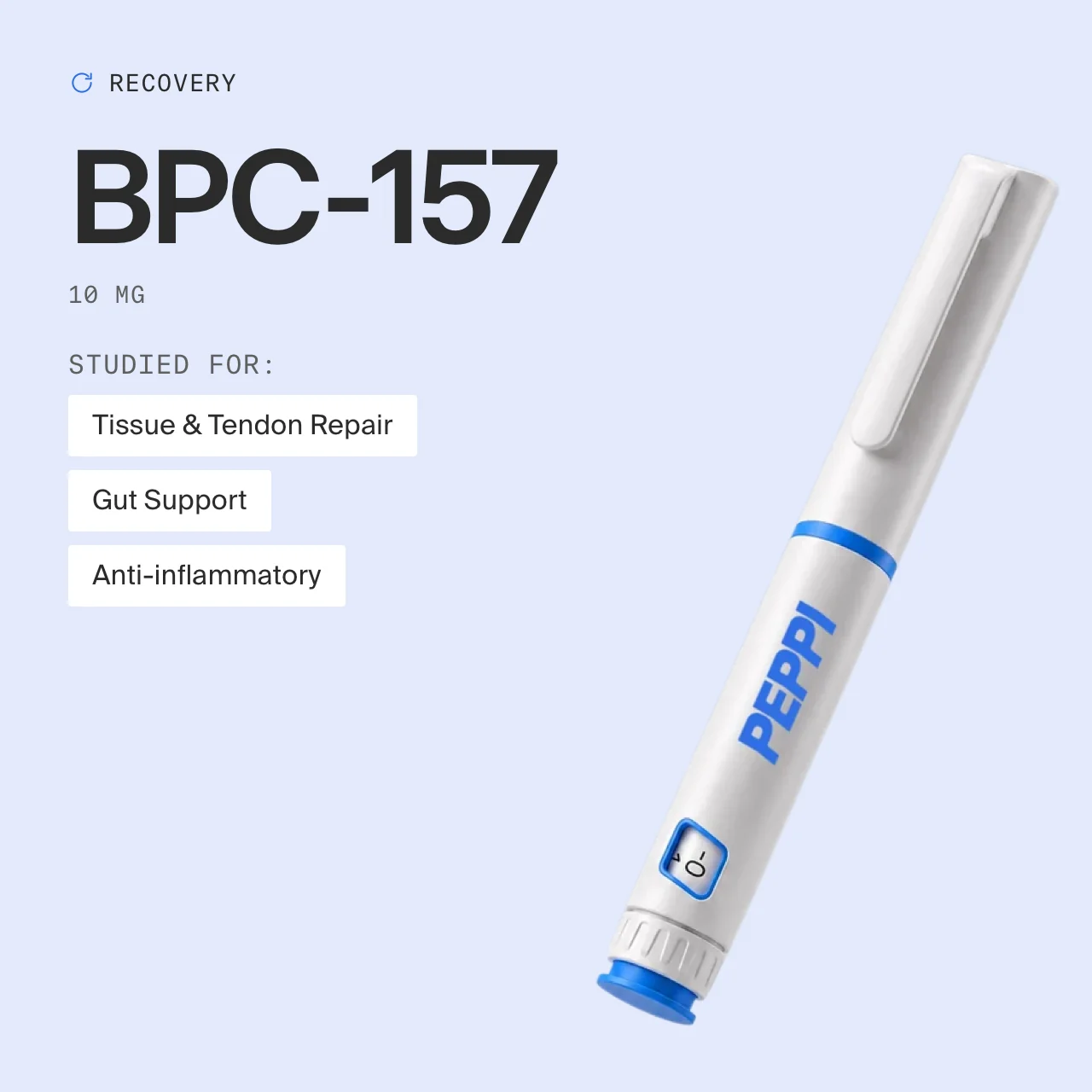
Peppi's BPC-157 pen holds 10 mg and is designed to support the body's natural repair processes in connective tissues, including muscles, tendons and ligaments. A licensed clinician personalizes your dose.
- Lab work points to growth hormone receptors in tendon cells
- Human knee data: one small study, no control group
- Peppi also lists gut health support as a focus
- Number 2.
TB-500 for tissue repair
A thymosin fragment for tendons
TB 500 is a lab-made copy of LKKTETQ, the seven-amino-acid stretch of thymosin beta-4 tied to actin binding, cell migration and wound healing. A 2012 doping-control paper from a horse racing lab describes it as a veterinary preparation, and a 2026 review for orthopedic surgeons notes it remains banned in sports.
Thymosin beta-4 is a natural peptide that platelets, macrophages and other cells release after an injury. A 2012 review links it to cell migration and new blood vessel growth, with human trials aimed at skin wounds, eye injuries and heart and brain tissue rather than joints.
The closest joint-related data is a 2026 study of repaired Achilles tendons in rats. After four weeks, tendons in the TB-500 group held significantly more load than untreated ones and looked better organized under the microscope, though the authors called the work exploratory. Human orthopedic data on TB-500 is still lacking, per that 2026 surgeons' review.
Peppi doesn't sell TB-500 alone. Each Wolverine, KLOW and GLOW pen holds 10 mg of it, always alongside BPC-157.
 TryWolverine Stack$189
- Number 3.
The Wolverine stack for joint injuries
BPC-157 & TB-500 in one pen
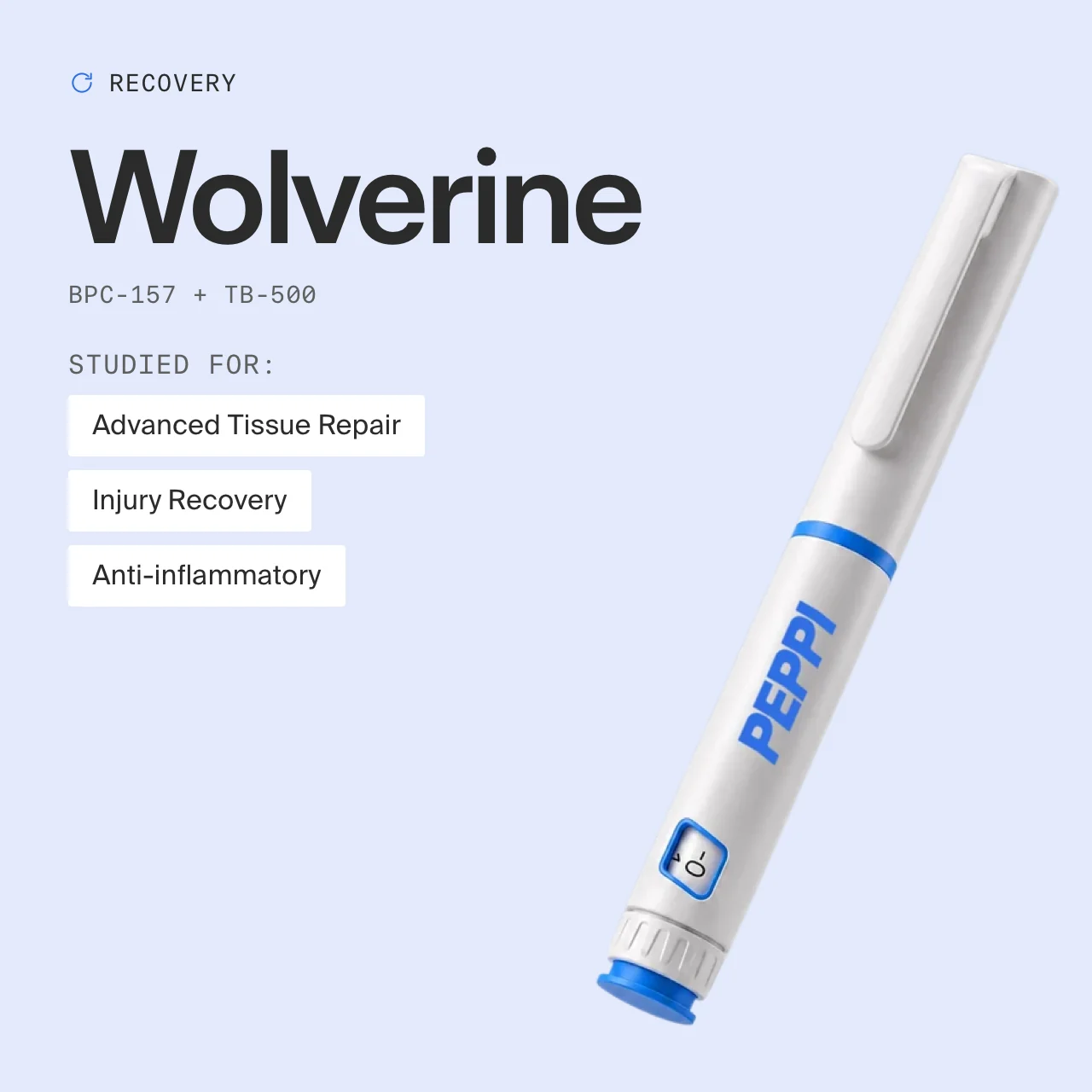
$379$189 first month 50% offThe Wolverine stack puts the first two peptides on this list in a single pen: 10 mg BPC-157 and 10 mg TB-500. Peppi describes it as combining two peptides being studied for their potential roles in tissue repair and regeneration.
"Wolverine peptide" is a nickname for that pairing, not a separate molecule.
Does stacking add anything? A 2026 rat Achilles study tested both peptides alone and together, and the combination gave no extra benefit over either one at four weeks. TB-500 alone posted the clearest results, while BPC-157 alone trended better but didn't reach statistical significance on load or total tissue scores.
That's a single small animal study, so it neither proves nor rules out an added effect in people.
Wolverine fits someone with a lingering joint or tendon injury who wants a clinician involved from intake onward. Pricing and details are on the Wolverine stack pen page.
- Same 10 mg of each peptide as KLOW, without the extras
- Twist‑to‑dose pen, refilled every 28 days
- Dose personalized by a licensed clinician
- Number 4.
KLOW for inflammation & repair
Four peptides, one routine
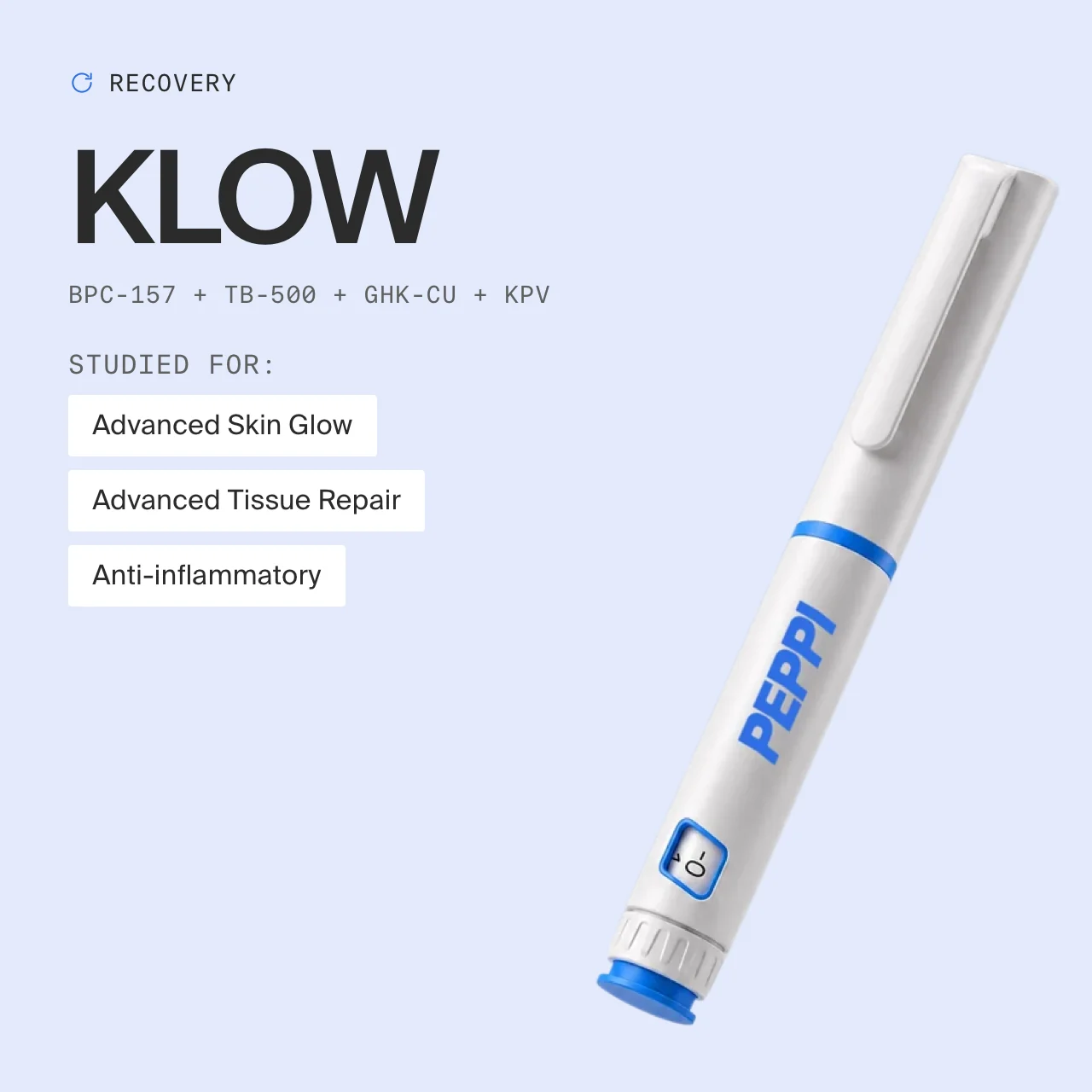
$449$224 first month 50% offKLOW takes the Wolverine pair and adds 50 mg GHK-Cu and 10 mg KPV, which makes it the only Peppi pen that contains KPV. Among peptides for inflammation, KPV is the main reason KLOW earns a spot here.
GHK-Cu is a copper peptide studied mostly for skin, collagen and wound healing, and a 2026 review for orthopedic surgeons found no clinical data on it for musculoskeletal conditions. Peppi lists advanced skin renewal, advanced tissue repair and inflammatory response as KLOW's focus.
Each of those claims rests on research into a single peptide, not the four together. Details and pricing are on Peppi's KLOW pen page.
"I switched to KLOW after a minor injury when my recovery felt like it was stalling out. My joints definitely feel less stiff when I wake up, and I actually have a spring in my step again. It’s been a staple in my routine since." (Mike R., verified buyer)
That's one customer's experience, not a study result.
- Number 5.
KPV for joint inflammation
Three amino acids, gut-first data
KPV makes this list with an asterisk, because its research focuses on gut inflammation, not joints. What is KPV peptide research telling us about knees and hips? So far, very little.
KPV is three amino acids (lysine, proline and valine) from the tail end of alpha-MSH, a hormone with anti-inflammatory effects. A 2008 review notes that KPV keeps that anti-inflammatory action without alpha-MSH's effect on skin pigment.
In a 2008 study, KPV reduced inflammatory signaling in human gut and immune cells, and KPV added to drinking water reduced colitis in two mouse models. Reviewers have named arthritis as a possible future use, which is still a hypothesis, not a finding.
Peppi offers KPV only inside the KLOW pen, at 10 mg.
 TryKLOW Stack$224
- Number 6.
CJC-1295 & ipamorelin for connective tissue
An indirect route through collagen
$379$189 first month 50% offCJC-1295 and ipamorelin earn the last spot for an indirect reason. They're designed to raise your own growth hormone, and growth hormone is linked to collagen production in tendon, yet neither peptide has been studied for joint pain.
CJC-1295 is a lab-made analog of growth hormone-releasing hormone, and ipamorelin is a selective growth hormone secretagogue. A 2018 review of secretagogues found few long-term, rigorously controlled studies of their effects.
The collagen link comes from growth hormone itself. In a 2010 growth hormone study, 10 healthy young men given daily growth hormone injections for 14 days showed collagen synthesis in the patellar tendon 1.3 times higher than on placebo. Myofibrillar protein synthesis, the muscle-building kind, didn't change.
That's why this pen sometimes comes up among peptides for tendon repair. It's still two steps removed, because the study used growth hormone injections rather than these peptides and measured collagen production rather than pain or recovery.
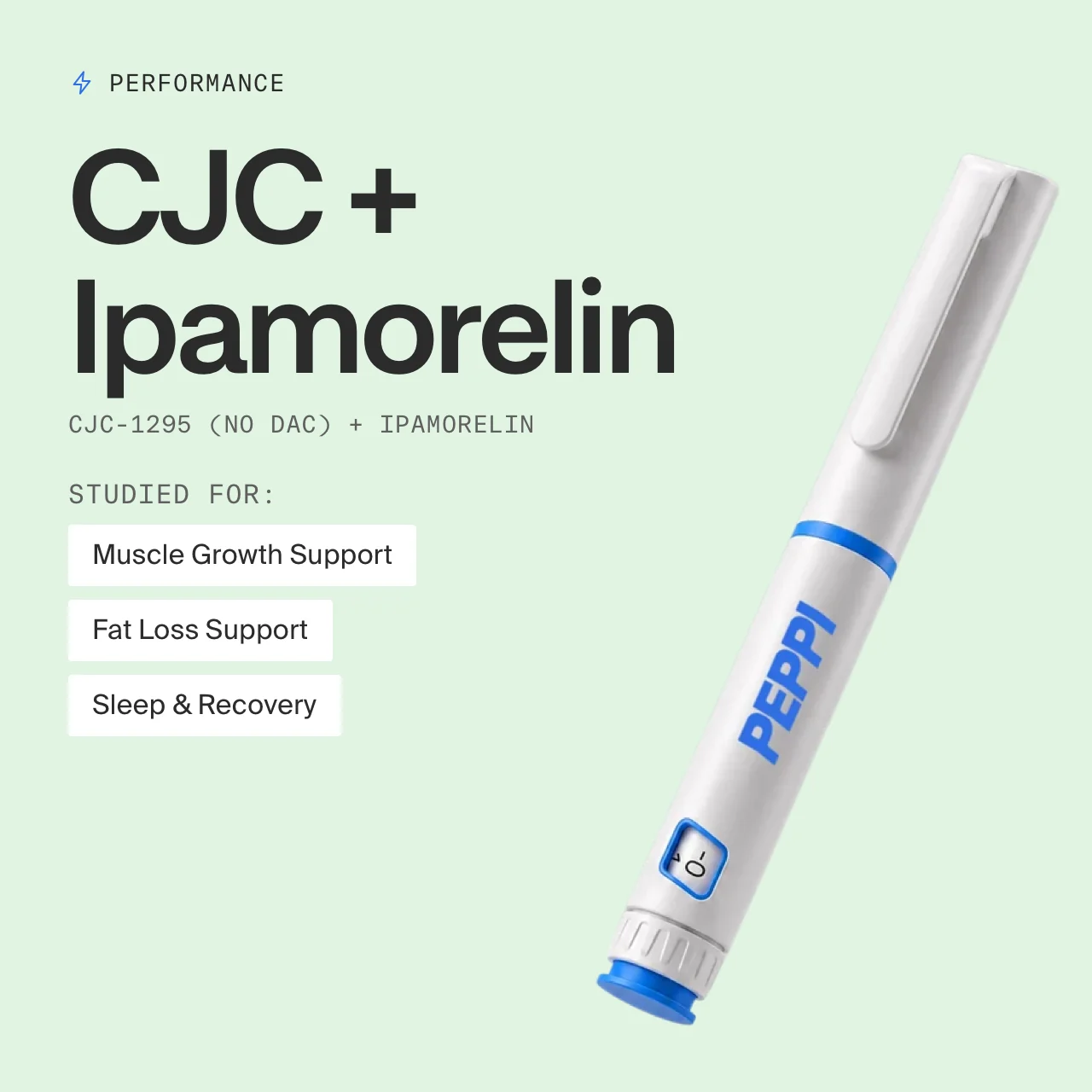
Peppi's CJC + Ipamorelin pen is built for muscle growth support, fat loss support and sleep and recovery. The 2018 review also flagged some concern that secretagogues may raise blood sugar, so share your full health history with your clinician.
Peptides for ligament repair
Rat data, real limits
Research on peptides for ligament repair is thinner than for tendons, and nearly all of it involves BPC-157 in rats. In a 2010 study, rats with a surgically cut medial collateral ligament (the MCL, on the inner side of the knee) got BPC-157 daily by injection, in drinking water or as a cream, and showed better function, strength and tissue scores over 90 days.
| Feature | Main research focus | Strongest evidence | Peppi pens |
|---|---|---|---|
| BPC-157 | Tendon, ligament & muscle injury | Rat studies, one small uncontrolled knee study | BPC‑157, Wolverine, KLOW |
| TB-500 | Tendon repair & wound healing | Rat & lab studies | Wolverine, KLOW, GLOW |
| KPV | Gut inflammation | Cell & mouse studies | KLOW |
| CJC-1295 & ipamorelin | Growth hormone release | Human hormone studies, none on joints | CJC + Ipamorelin |
"Healing peptides" is a popular label for BPC-157 and TB-500, but none of the peptides here is FDA-approved for any joint, tendon or ligament condition. A torn ligament can need surgery or structured rehab, so get the injury diagnosed before you add anything.
Featured pen
Wolverine
Peppi's joint and injury recovery pen pairs 10 mg BPC-157 with 10 mg TB-500. A licensed clinician reviews your intake and personalizes your dose.
$379 $189 first month 50% off
Every Peppi prescription is reviewed by a licensed clinician, every batch is third-party lab tested before it ships, and a named U.S. pharmacy dispenses every pen. Peptide therapy is cumulative, so Peppi recommends committing 4-6 months for results to build.
Not sure which pen fits your joints?
Take the quizQuestions about peptides for joint pain
Frequently asked questions
What Is the Best Peptide for Knee Pain?
No peptide is proven for knee pain. The only human knee data among these peptides is a small 2021 chart review in which 11 of 12 people given a BPC-157 knee injection said their pain improved, with no control group. Knee pain has many causes, so a clinician should know what's behind yours. For injury recovery, Peppi's Wolverine pen pairs BPC-157 with TB-500.
How Long Does BPC-157 Take to Help Joint Pain?
No human trial has measured how long BPC-157 takes to help joint pain, so any exact timeline is a guess. Peppi notes that peptide therapy is cumulative and recommends committing 4-6 months for results to build. Onset and response vary from person to person, and your clinician can adjust your plan at each 28-day refill.
Can You Combine Peptides for Joint Pain?
Yes, and two of Peppi's pens already do. Wolverine pairs BPC-157 with TB-500, and KLOW adds GHK-Cu and KPV. Whether combining helps more is an open question: one 2026 rat Achilles study found the BPC-157 and TB-500 combination added no benefit over either peptide alone. A clinician can decide whether one pen covers your goal.
*These statements have not been evaluated by the Food and Drug Administration. Peppi peptides are dispensed only with a prescription.