
In this guide
Peptides for fat loss vs GLP-1 medications
Different signals, different goals
The peptides for fat loss on this list work through growth hormone or cell metabolism, not through appetite the way GLP-1 medications do. That difference shapes what you can fairly expect from them.
GLP-1 medications such as semaglutide and tirzepatide mimic GLP-1, a hormone that acts on the areas of the brain that regulate appetite and food intake. Per the NIH guide to weight management medications, both are FDA-approved for long-term use in adults who meet set BMI criteria.
Line up peptides vs GLP 1 drugs and the mechanisms split. Tesamorelin, CJC-1295, ipamorelin and sermorelin prompt your pituitary gland to release more of your own growth hormone. MOTS-c is a peptide made by your mitochondria, studied for how your muscles handle energy and insulin.
So don't read this list as a set of GLP-1 substitutes. These peptides work differently, their fat-loss evidence is far thinner, and none of Peppi's pens is an FDA-approved product.
The best peptides for fat loss here are the ones whose research fits your goal: deep belly fat, metabolic health or body composition. A licensed clinician reviews your intake before anything ships, and you can check Peppi's batch test results by lot number.
The short answer
Tesamorelin has the strongest fat data, for visceral belly fat, mostly from trials in adults with HIV-associated lipodystrophy. MOTS-c's fat findings come from mice, and CJC-1295, ipamorelin and sermorelin have little body fat data in healthy adults. None of them works like a GLP-1 medication or replaces one.
- Number 1.
Tesamorelin for weight loss & visceral fat
Real belly fat data, narrow approval
$449$224 first month 50% offTesamorelin is the only peptide here approved for any kind of fat reduction, and that approval is narrow. Sold as Egrifta, it's FDA-approved to reduce excess abdominal fat in HIV-infected adults with lipodystrophy.
The best-known tesamorelin results come from two 26-week trials summarized on the Egrifta FDA label. Visceral fat, the deep fat packed around the organs, fell by about 18% and 14% on average with tesamorelin. In the placebo groups it moved 2% or less.
Body weight barely changed. The label calls tesamorelin weight neutral and says it is not indicated for weight loss management, so if you're considering tesamorelin for weight loss on the scale, that isn't what the trials showed. The shift came in belly fat and lean mass.
A 2019 tesamorelin muscle fat trial analysis looked inside the muscle. Among people whose visceral fat dropped at least 8%, CT scans showed denser, larger trunk muscles than on placebo, a sign of less fat stored in the muscle. Everyone in it had HIV and abdominal obesity, and 87% were men.
Outside HIV, a 2012 trial gave tesamorelin or placebo to 60 abdominally obese adults with reduced growth hormone secretion for 12 months. Visceral fat fell on tesamorelin compared with placebo, while the fat just under the skin didn't change significantly.
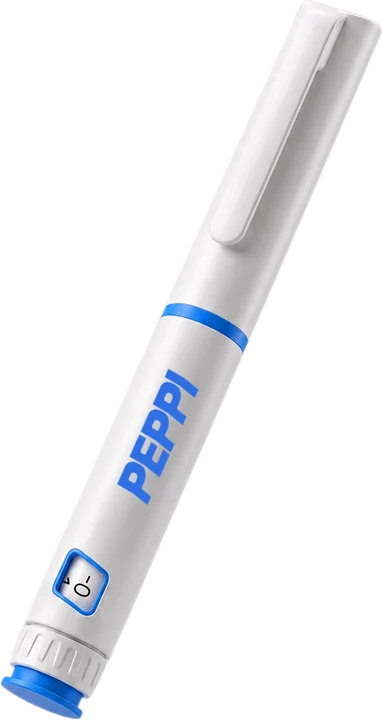
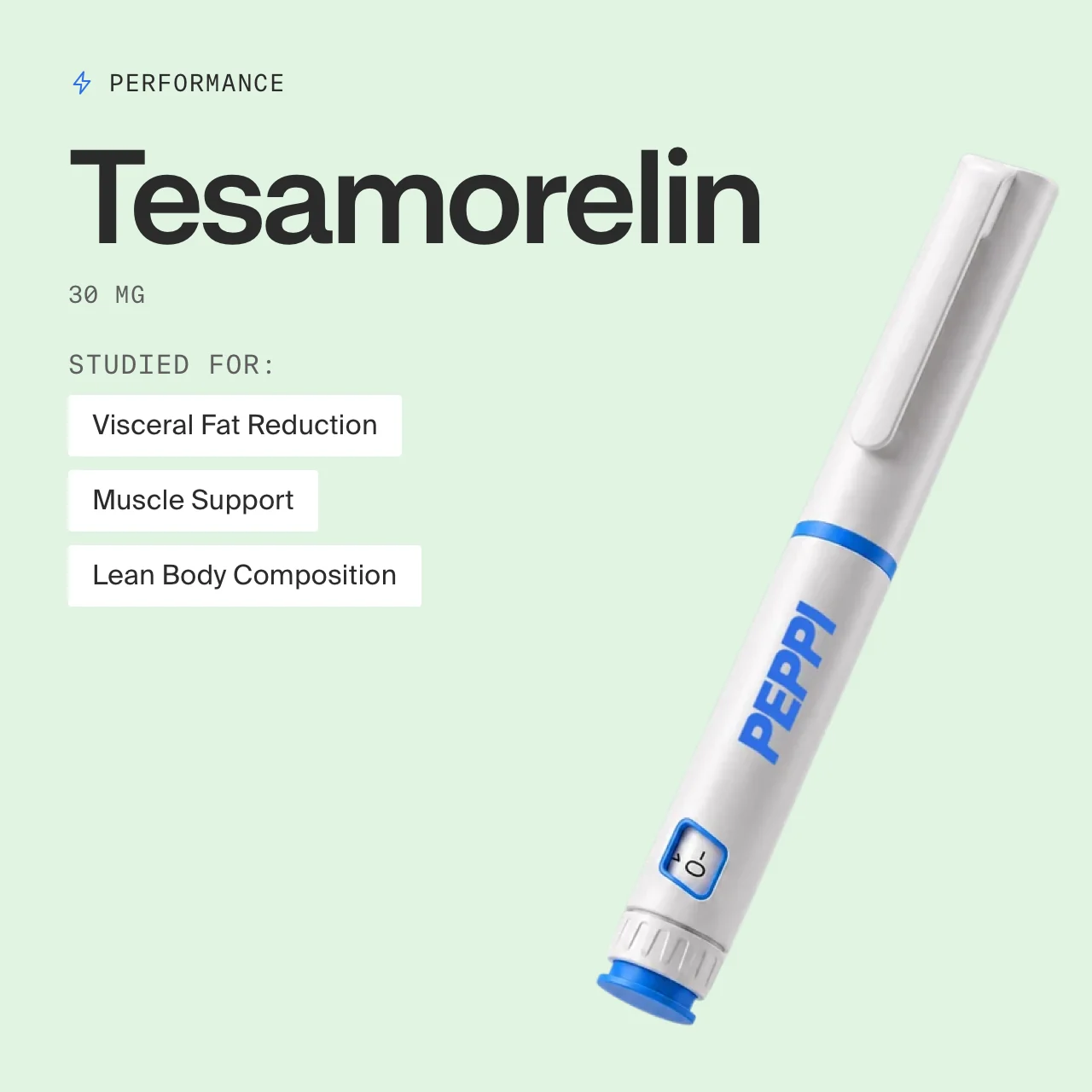
Peppi's Tesamorelin pen holds 30 mg of tesamorelin and is designed to support visceral fat reduction and lean body composition. It isn't Egrifta, and like every Peppi pen it isn't FDA-approved.
The label also warns that tesamorelin can cause glucose intolerance. By week 26, 5% of tesamorelin patients reached a diabetes-range HbA1c (6.5% or higher), compared with 1% on placebo, which is one reason a clinician reviews your health history before you start.
“I had been doing the right things but still wasn’t seeing much change around my waist. My friend recommended Tesamorelin from Peppi and I noticed my clothes started fitting better and I could actually see the progress. Having a clinician check in made it feel a lot more legit than things I’d tried before.” (Daniel M., verified buyer)
That's one person's experience, not a trial result.
- Number 2.
MOTS-c for weight loss & metabolism
A mitochondrial signal, tested in mice
$449$224 first month 50% offMOTS-c has the most striking metabolic data on this list, and nearly all of it comes from mice. It's a 16-amino-acid peptide encoded in your mitochondrial DNA, and skeletal muscle appears to be its main target.
The study behind most talk of MOTS c for weight loss is a 2015 MOTS-c mouse study in Cell Metabolism. Mice on a high-fat diet got MOTS-c daily for 8 weeks, and the authors wrote that it "remarkably prevented obesity." The treated mice ate the same number of calories as the untreated ones.
The same paper reports that MOTS-c prevented insulin resistance in mice, both the kind that came with age and the kind brought on by a high-fat diet. That's why it shows up on lists of peptides for metabolism. Mouse results still can't tell you what MOTS-c does in a person.
Human evidence is thin. A 2023 review describes clinical trials of MOTS-c as currently limited, and the human studies it covers mostly measure the MOTS-c people's bodies make on their own, such as blood levels or the rise after exercise.
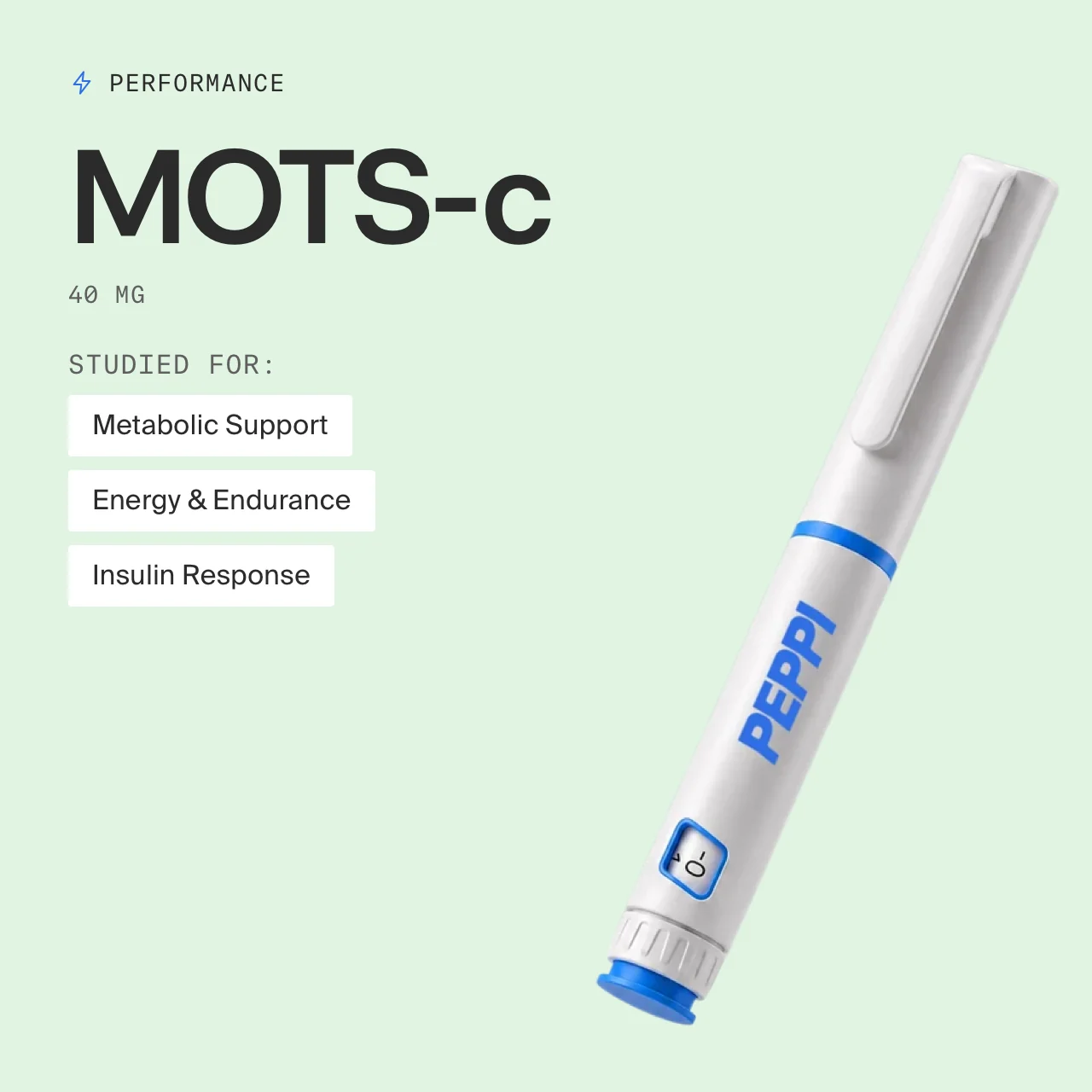
If you're weighing MOTS-c for weight loss, know that Peppi frames its pen as metabolic support. The pen holds 40 mg of MOTS-c, a peptide being studied for its potential role in metabolism, cellular energy, endurance and insulin sensitivity.
"I was just dragging through the afternoons at work a bit. Adding MOTS-C gave me very steady clean energy and an extra dose of motivation. I’m finally pushing past plateaus and feel like I have way more energy." (Kevin L., verified buyer)
His review is about energy, not the scale.
- Prevented diet‑induced obesity in mice
- Same calorie intake in treated and untreated mice
- Clinical trials in people still limited
- Number 3.
CJC-1295 for body composition
A GHRH analog with thin fat data
$379$189 first month 50% offCJC-1295's fat-loss case rests on what growth hormone does, not on fat measured in CJC-1295 users. It's a lab-made analog of growth hormone-releasing hormone (GHRH), the signal that tells your pituitary to release growth hormone. In adults who lack growth hormone, replacing it can raise lean mass and lower fat mass.
The best-documented CJC 1295 benefits are hormonal. In a 2006 study of healthy adults aged 21 to 61, a single injection lifted average growth hormone 2- to 10-fold for six days or more, and IGF-1 1.5- to 3-fold for 9 to 11 days.
That study used the version with DAC, an add-on that binds a blood protein and stretches the effect over days. Peppi's pen uses CJC-1295 without DAC, so don't judge it by those multi-day figures. Body fat wasn't an outcome in that study either.
Broader reviews don't fill the gap. A 2018 review of growth hormone secretagogues as a class, which didn't include CJC-1295, found that the research on those drugs offers "few objective insights" on body composition.
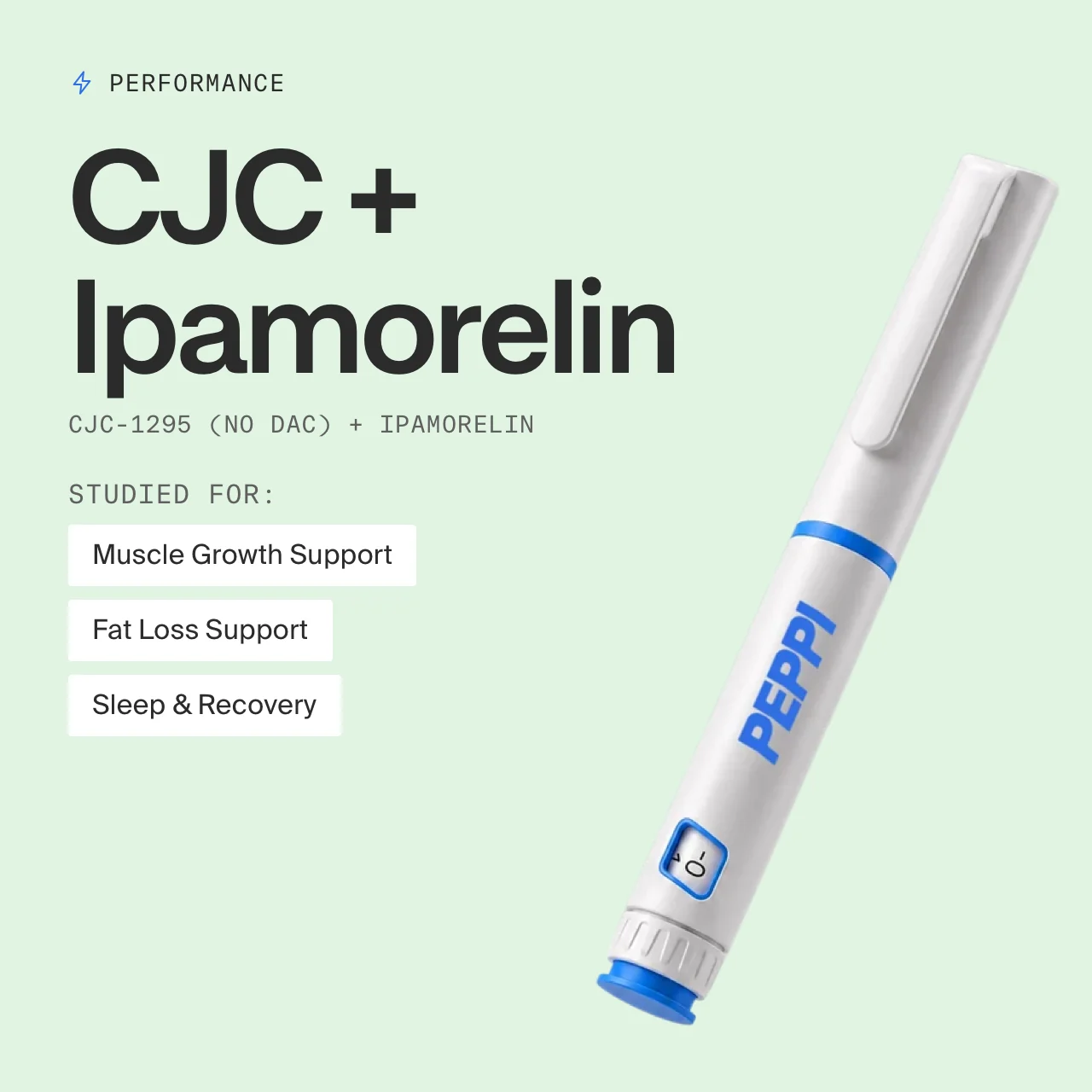
Peppi sells CJC-1295 only in its CJC + Ipamorelin pen, which holds 10 mg of each peptide. Peppi lists fat loss support for it, next to muscle growth support and sleep and recovery.
- Raises your own growth hormone and IGF‑1
- Little body fat data in healthy adults
- Growth hormone secretagogues can raise blood sugar
- Number 4.
Ipamorelin for lean mass
A selective growth hormone trigger
Ipamorelin's lean mass evidence comes from animals. It's a five-amino-acid peptide that triggers growth hormone through the ghrelin receptor, a different route from CJC-1295.
It earned the label selective in 1998, when researchers found it released growth hormone in pigs without raising the stress hormones ACTH and cortisol, unlike similar peptides.
Human data stop at hormone levels. In a 1999 study of healthy male volunteers, ipamorelin set off one burst of growth hormone that peaked at about 40 minutes, then fell to negligible levels.
Most claimed ipamorelin benefits for lean mass trace back to rodents, and the rodent data don't point toward fat loss. Adult female rats given ipamorelin for 15 days gained body weight in a dose-dependent way, though that study measured weight, not muscle. In a 2001 mouse study, ipamorelin raised body fat relative to body weight, possibly by increasing food intake.
A 2020 review of these peptides says more human studies of ipamorelin are still needed.
Peppi doesn't sell ipamorelin on its own. It comes paired with CJC-1295 in one pen, so a GHRH signal and a ghrelin-receptor signal work side by side.
 TryCJC + Ipamorelin$189
- Number 5.
Sermorelin as a milder GHRH option
Short acting, with a past FDA approval
Sermorelin is a shortened copy of your natural GHRH, and it's milder in the sense that it acts briefly and stays under your body's own controls. A 2020 review lists its half-life at 10 to 20 minutes, against about 6 to 8 days for CJC-1295 with DAC. The growth hormone it releases is still regulated by somatostatin, the hormone that works as your body's brake on growth hormone.
It also has a regulatory history. Under the name Geref, sermorelin was FDA-approved to treat growth hormone deficiency in children with growth failure. The maker discontinued it in 2008, and FDA later determined it wasn't withdrawn for reasons of safety or effectiveness.
Sermorelin benefits for fat loss haven't shown up in the small studies so far. In a 1997 study, 11 healthy men aged 64 to 76 used it nightly for 6 weeks. Their nighttime growth hormone rose and two of six strength measures improved, but weight, waist-to-hip ratio and scan measures of muscle and fat stayed the same.
Another 1997 study gave a close sermorelin analog nightly for 16 weeks to 19 adults aged 55 to 71. Lean mass rose in the men only, and body weight didn't change in either sex.
Peppi doesn't offer sermorelin. If a GHRH option appeals to you, a clinician can talk through whether tesamorelin or CJC-1295 fits your goal.
Stacking peptides for fat loss & muscle
Start with one pen
Stacking peptides for fat loss and muscle gain, at Peppi, comes down to pairing a growth hormone peptide with a metabolic one. Peppi's own product pages suggest CJC + Ipamorelin with MOTS-c, and each page names the other as a pairing.
| Feature | Pen to discuss | What's in it | Fat-loss evidence |
|---|---|---|---|
| Deep belly fat | Tesamorelin | 30 mg tesamorelin | Trials, mostly in adults with HIV lipodystrophy |
| Metabolic health | MOTS‑c | 40 mg MOTS‑c | Mouse studies |
| Body composition | CJC + Ipamorelin | 10 mg CJC‑1295 (no DAC), 10 mg ipamorelin | Hormone data, little on fat |
| A milder GHRH option | Not sold by Peppi | Sermorelin | Small studies in older adults |
The best peptides for muscle growth and fat loss depend on which problem is bigger for you. That's a call for your clinician.
More isn't automatically better. Tesamorelin, CJC-1295 and ipamorelin all push growth hormone, and you can only be prescribed one growth hormone peptide at a time, so tesamorelin and CJC + Ipamorelin are never prescribed together. Drugs that raise growth hormone can also raise blood sugar. Two pens mean two monthly bills and more to track. And NIH notes that even approved weight management medications work best with a lifestyle program and don't replace physical activity or healthy eating.
Featured pen
CJC + Ipamorelin
Peppi's CJC + Ipamorelin pen holds 10 mg CJC-1295 (no DAC) and 10 mg ipamorelin, with fat loss support among its goals. A licensed clinician personalizes your dose.
$379 $189 first month 50% off
Each pen is a one-month supply, refilled every 28 days and dispensed by a named U.S. pharmacy. Peptide therapy is cumulative, so Peppi recommends committing 4-6 months for results to build.
Not sure which pen fits your fat-loss goal?
Take the quizQuestions about peptides for fat loss
Frequently asked questions
Which Peptide Burns the Most Fat?
None of these peptides has strong fat-loss data in healthy adults. Tesamorelin has the best fat data: it reduced visceral belly fat in trials, mostly of adults with HIV-associated lipodystrophy, with little change in body weight. MOTS-c prevented diet-induced obesity in mice. A clinician can tell you which, if any, fits your goals.
Are Fat Loss Peptides the Same as GLP-1s?
No. GLP-1 medications such as semaglutide and tirzepatide mimic a hormone that acts on the brain's appetite centers, and they're FDA-approved for long-term weight management. The peptides here act on growth hormone or cell metabolism instead, and their fat-loss evidence is much thinner. They aren't a replacement for a GLP-1 medication your doctor has prescribed.
How Long Do Fat Loss Peptides Take to Work?
There's no reliable timeline, because response varies from person to person and the research is limited. Peppi notes that peptide therapy is cumulative and recommends committing 4-6 months for results to build. Track something concrete, like your waist measurement, and review it with your clinician and care team as your plan is adjusted.
*These statements have not been evaluated by the Food and Drug Administration. Peppi peptides are dispensed only with a prescription.