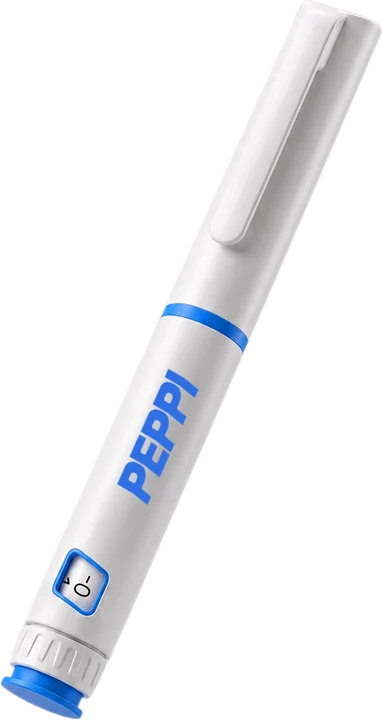
Wolverine peptide stack
5 things to know about Wolverine
BPC-157 and TB-500, two peptides studied for tissue repair, in one pre-filled pen. Prescribed by a licensed clinician and lab tested before it ships.
- Third-party tested
- Ongoing care team
- Pharmacy compounded
- Free 2-day shipping
Takes under 2 minutes · 100% private · No insurance required

$379 $189 50% off
What to know about Wolverine
You train, you do the rehab work, you rest. But a nagging injury or a slow recovery can still stall the routine you worked hard to build.
That is one reason the Wolverine stack gets attention. It pairs BPC-157 and TB-500, two peptides studied for tissue repair, mostly in animals.
Here are five things to know before you ask a clinician about it.
01of 05
It pairs two recovery peptides in one pen
Wolverine combines BPC-157 and TB-500, 10 mg of each. BPC-157 is a 15-amino-acid fragment of a protein found in gastric juice. TB-500 is a lab-made copy of a seven-amino-acid stretch of thymosin beta-4.
- BPC-157
- 10 mg, a 15-amino-acid peptide
- TB-500
- 10 mg, a 7-amino-acid stretch of thymosin beta-4
- In each pen
- 20 mg total, a one-month supply
- Form
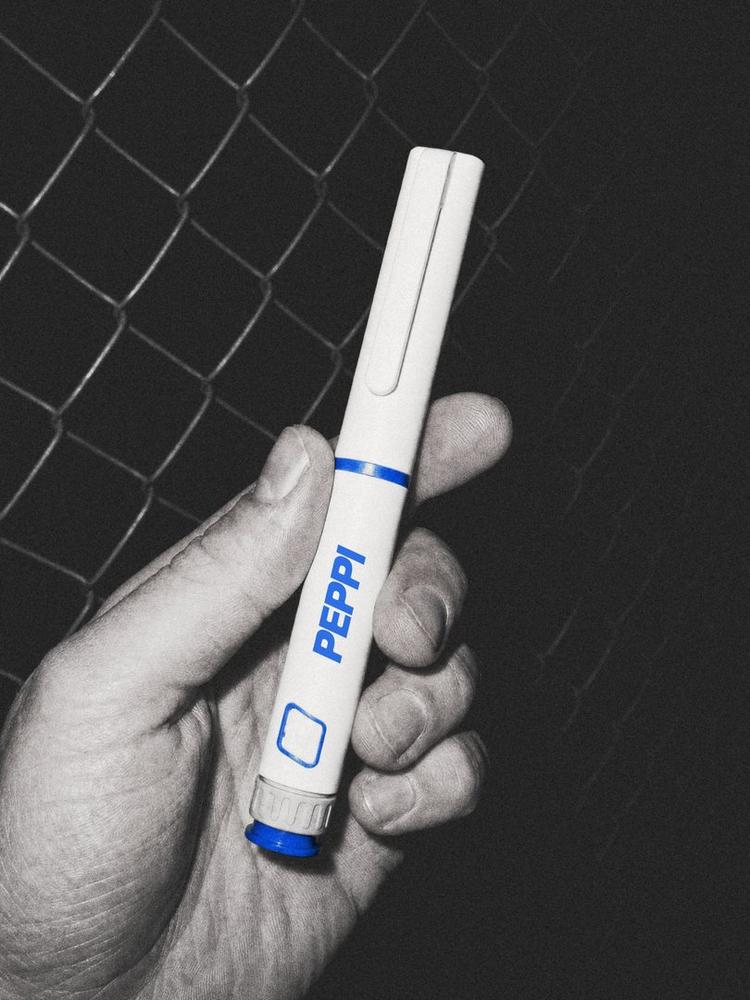
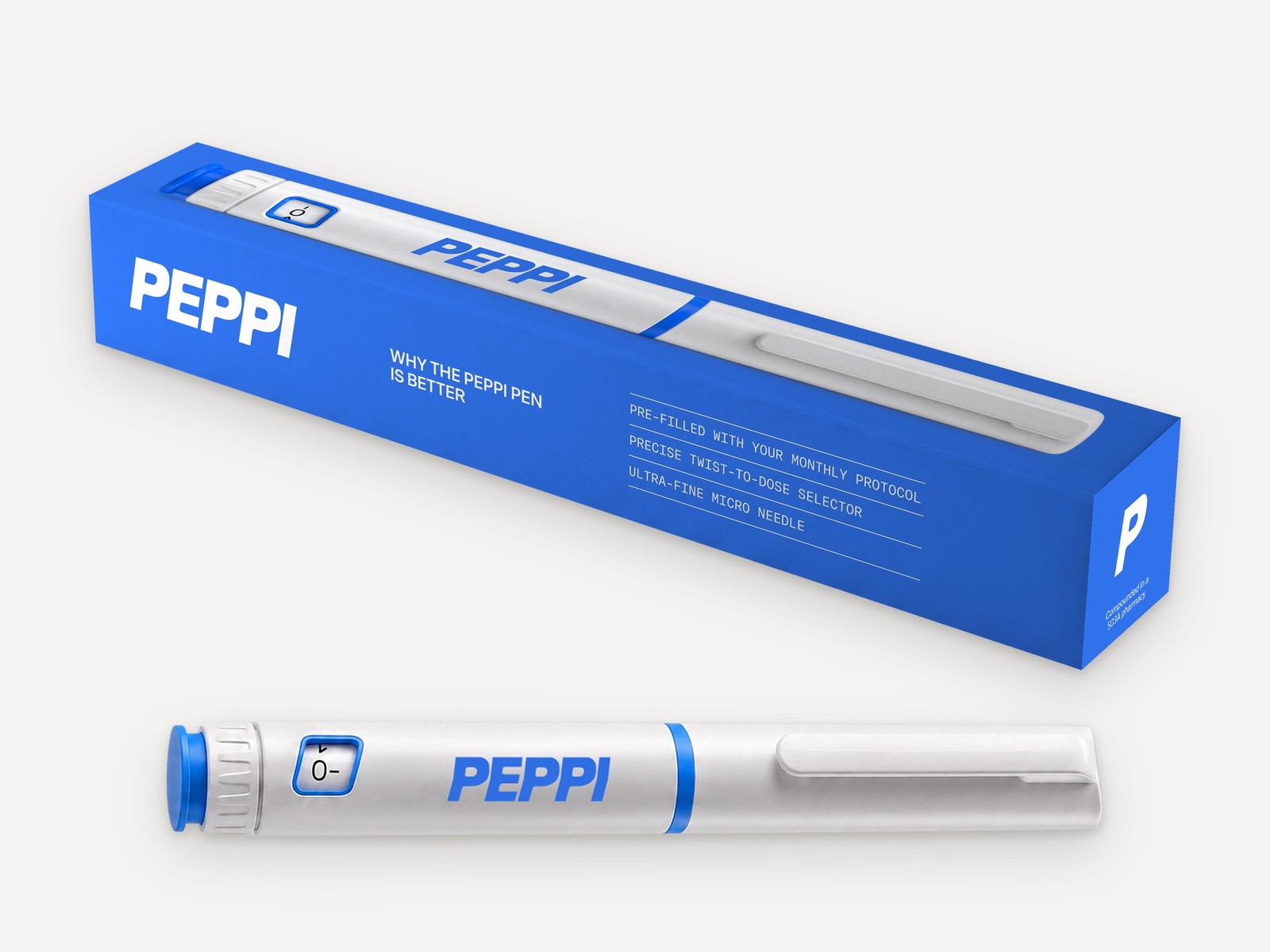
- Pre-filled pen with a twist-to-dose selector

02of 05
Both peptides are studied for tissue repair
Most of the interest comes from injury research. BPC-157 and TB-500 have each been studied for healing, mostly in rats and cell cultures.
Advanced tissue repair
Combines two peptides being studied for their potential roles in tissue repair and regeneration.
Injury recovery
Designed to support the body's natural recovery processes following physical stress or injury.
Anti-inflammatory
Designed to support pathways associated with inflammation and recovery, to help promote a healthy healing environment.
32
rats in a combo study
A 2026 rat Achilles study tested BPC-157, TB-500 and the pair. The combination added no benefit over either peptide alone.
0
human data on TB-500
FDA has not identified any human exposure data for TB-500, its compounding page said in April 2026.
<30
people studied BPC-157
A 2026 review counted fewer than 30 people across three uncontrolled pilot studies of BPC-157.
S0, S2
on WADA's list
WADA's 2026 Prohibited List names BPC-157 under S0 and TB-500 under S2, so both are banned in tested sport.
03of 05
The human research is still early
That's the honest part, and it matters. FDA found no human studies of TB-500, and in a 2026 rat study the pair added no benefit over either peptide alone. A clinician should decide whether it fits your goals and health history.
No human trial has tested BPC-157 and TB-500 together. That is why every Peppi prescription starts with a clinician review of your intake.
Results come in stages.
Week 1
Build the routine
Start consistently and track the issues you want to improve, including comfort, movement, and workout recovery. Keep following the rest of your recovery plan.
Weeks 2–4
Feel early signals
Everyday movement may begin to feel easier, with less soreness after normal activity.
Months 2–3
Experience consistent relief
Relief may feel more dependable from one day to the next. Movement, rehab work, and controlled training should start feeling easier to repeat consistently.
Months 4–6
Sustain the benefit
The goal is steady function with fewer setbacks and more confidence in your routine.
Peptide therapy is cumulative. We recommend patients commit 4‑6 months for results to build.
*Applies only if a practitioner prescribes treatment. Onset and response vary by individual; statements pending medical review and are not a guarantee of outcomes.
04of 05
Results come in stages
Peptide therapy is cumulative. Here's what Peppi tells patients to expect over the first six months, if a clinician prescribes it.
05of 05
Peppi puts both peptides in one pre-filled, tested pen
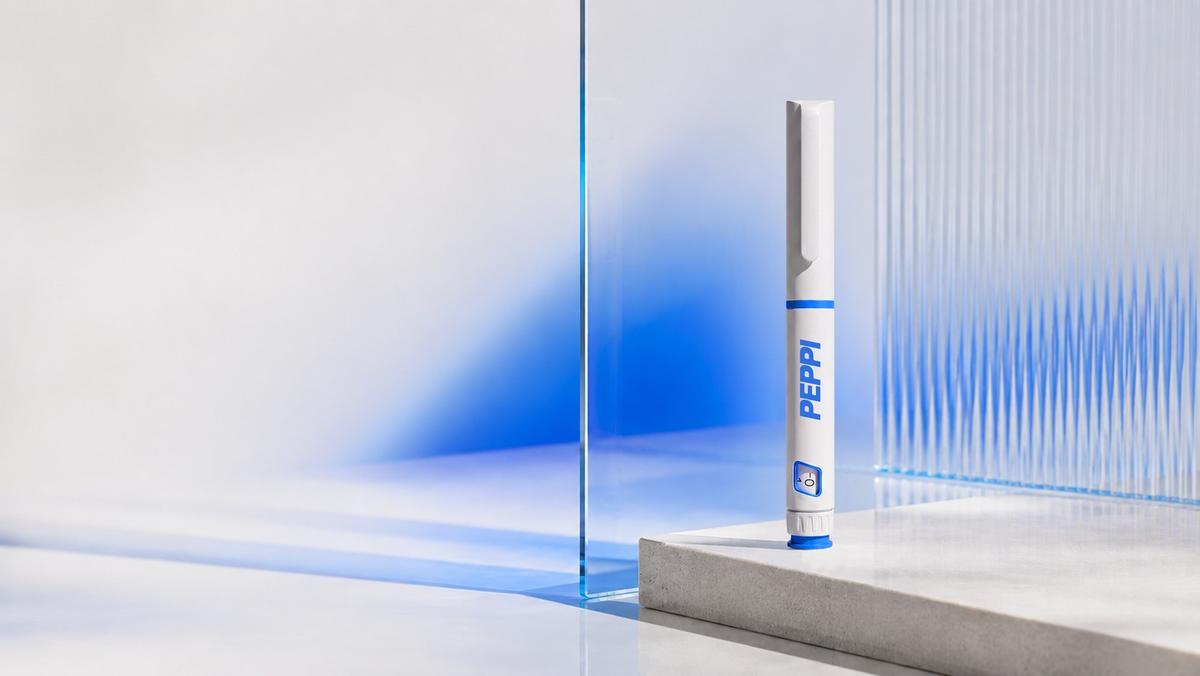
No vials, no mixing and no guesswork. Both peptides come premixed in one pen, a one-month supply. Every batch is lab tested before it ships, with each peptide measured, and a licensed clinician sets your dose.
The Wolverine pen
Everything you need, in one pen
Shop all peptidesOne pen, eight peptides. Pick yours:
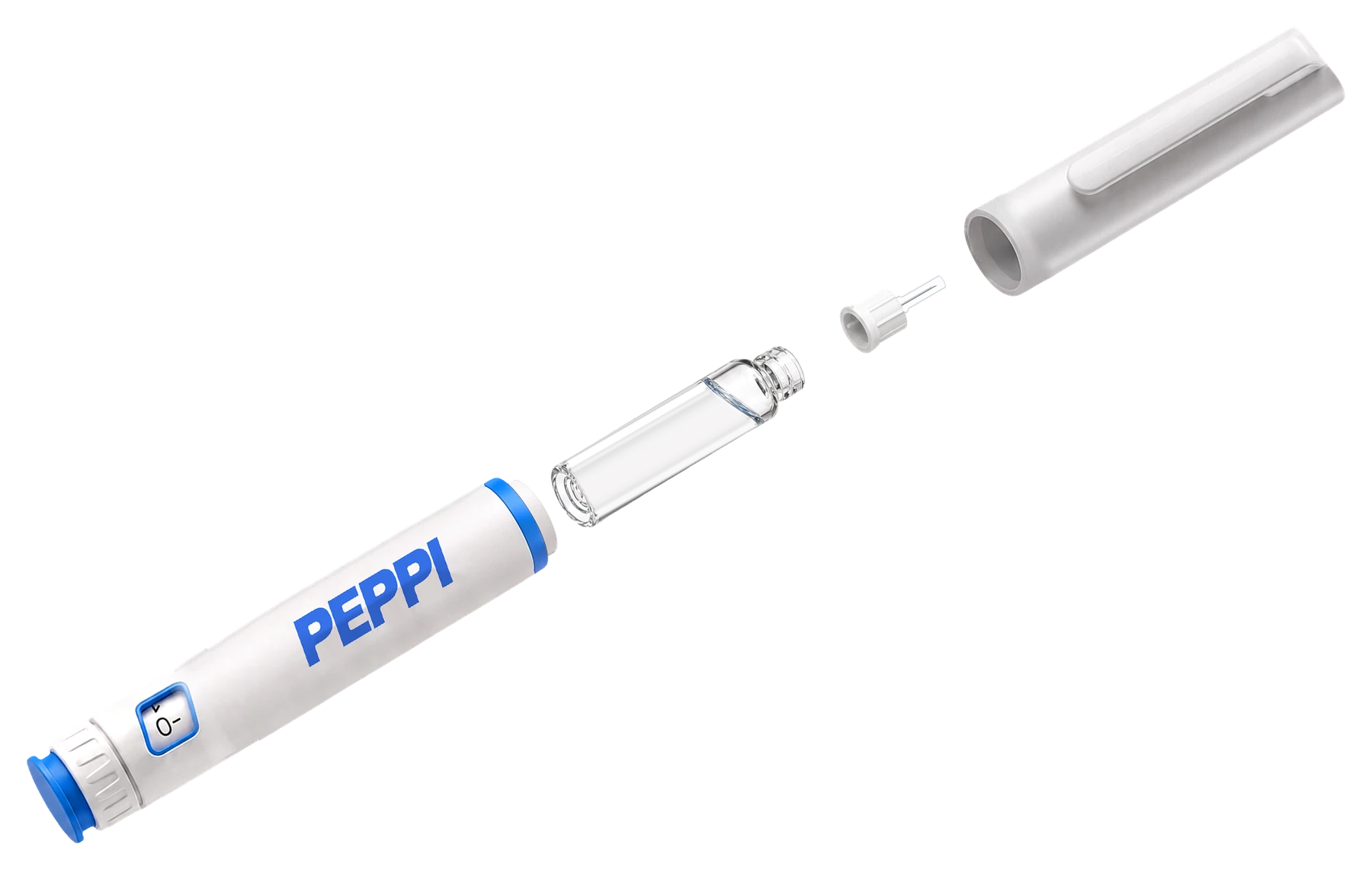
Wolverine 20 mg peptide pen
Wolverine
BPC-157 10 MG · TB-500 10 MG
Wolverine pairs two recovery peptides in one pen: BPC-157, first isolated from human gastric juice, and TB-500, the active site of thymosin β4.
Studied for:
Add to cartFull refund if your prescription isn't approved
- Third-party tested
- Ongoing care team
- Pharmacy compounded
- Free 2-day shipping
Third-party lab tested peptides
What's in the pen matters. So does where it comes from.
Your peptides shouldn't come with guesswork. Peppi's prescription protocols are clinician-reviewed, filled by licensed U.S. pharmacies, and lab tested before they reach your door.
- Sourced from licensed U.S. pharmacies
- Clinician-reviewed prescriptions
- Pharmaceutical-grade ingredients only
- Batch-tested before shipping
Testing performed by Accumark Labs and Atlas Analytics, independent third-party laboratories
Peppi pens vs “research use only” peptides
How Peppi compares
| Peppi | Research-use-only peptides | |
|---|---|---|
| For human use | Yes | No |
| Pre-filled & pre-mixed | Yes | No |
| Easy dosing | Yes | No |
| Prescribed by a clinician | Yes | No |
| Dispensed from a pharmacy | Yes | No |
| Third-party lab tested | Yes | No |
| Ongoing care team | Yes | No |
Not sure where to start?
Answer a few questions and we'll tell you where to start.
How online peptide prescriptions work
From quiz to your door in 2–3 days
Step 1 Today
Answer a few questions. We'll handle the rest.
- No commitment required
- 100% online, takes under 2 minutes
- 100% private and secure
Step 2 Within 24 hours
A real clinician builds your plan.
- Dosing personalized from day one
- Peptides matched to your body and goals
- Licensed, certified clinicians
Step 3 Within 2–3 days
Everything you need. Delivered to your door.
- Direct from a U.S. pharmacy
- Free 2-day shipping
- Your pen, supplies, care team, and personalized plan
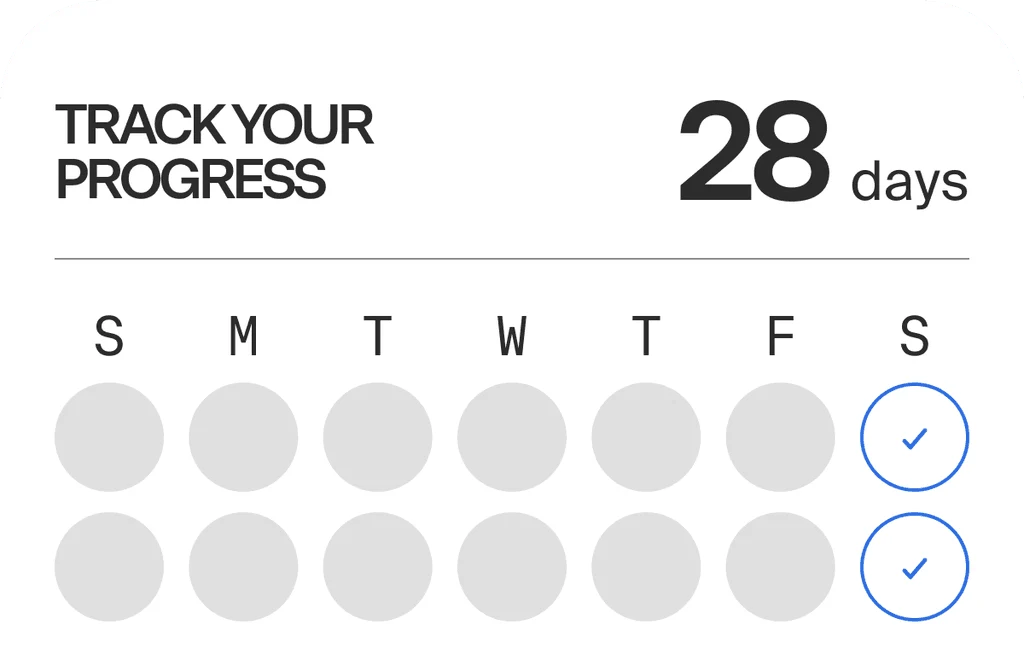
Step 4 Every 28 days
Your plan evolves with your goals.
- Unlimited video calls & messaging with your care team
- Simple refills & adjustments
- Pause or cancel anytime
Wolverine FAQs
Frequently asked questions
What is the Wolverine peptide stack?
The Wolverine Stack is a pairing of two peptides studied for tissue repair: BPC-157 and TB-500. Peppi's Wolverine pen combines 10 mg of each in one pre-filled pen, prescribed after a licensed clinician reviews your intake. Most research behind both peptides comes from animals, and studies of the pairing itself are rare.
What peptides are in the Wolverine stack?
The Wolverine Stack contains two peptides: BPC-157, a 15-amino-acid fragment of a protein found in gastric juice, and TB-500, a lab-made copy of a seven-amino-acid stretch of thymosin beta-4. Peppi's Wolverine pen holds 10 mg of each. Every batch is third-party lab tested for potency, sterility, pH and endotoxins before it ships.
What does the Wolverine stack do?
The Wolverine Stack is designed to support tissue repair, injury recovery and inflammatory response, the goals Peppi lists for its pen. BPC-157 and TB-500 have each been studied for healing, mostly in rats and cell cultures, while FDA found no human studies of TB-500. What the combination does in people has not been tested.
Can you take BPC-157 and TB-500 together?
BPC-157 and TB-500 can be prescribed together, and Peppi's Wolverine pen combines 10 mg of each. Evidence for the pairing is limited: one 2026 rat Achilles study found the combination gave no added benefit over either peptide alone. Both are on WADA's 2026 Prohibited List, which matters if you compete in tested sport.
Is the Wolverine stack better than BPC-157 alone?
The Wolverine Stack has not been shown to beat BPC-157 alone. In a 2026 rat Achilles study, the BPC-157 and TB-500 combination added no benefit over either peptide by itself, and TB-500 alone showed the clearest strength gain. No human study has compared them, so let a clinician weigh your goals.
What is the Wolverine stack dosage?
The Wolverine Stack has no established dosage, because no human trial has tested BPC-157 and TB-500 together and FDA found no human data on TB-500 at all. Peppi's Wolverine pen holds 10 mg of each as a one-month supply. A licensed clinician sets your dose from your intake, and the twist-to-dose selector delivers it.
How long does the Wolverine stack take to work?
The Wolverine Stack has no human data on how long it takes to work. The closest timing evidence is a 2026 rat study that measured Achilles tendon healing after four weeks, and rat timelines don't map neatly onto people. Peppi recommends committing 4 to 6 months, with plan adjustments at each 28-day refill.
Should you choose Wolverine or KLOW for recovery?
Wolverine and KLOW share a base of 10 mg BPC-157 and 10 mg TB-500, and KLOW adds 50 mg GHK-Cu and 10 mg KPV. Peppi lists Wolverine for tissue repair and injury recovery, and KLOW for skin renewal and tissue repair. No study has compared them, so ask a clinician which fits.
Have more questions?
Email: [email protected]
Call: +1 302-499-3831
Wolverine articles & guides
Read more about Wolverine
 Comparison
BPC-157 vs TB-500: What each peptide does & why the Wolverine stack pairs them
Where each peptide comes from, what animal research shows, and why Peppi's Wolverine pen pairs 10 mg of each.
Peppi HealthOct 22, 2026 Listicle
6 best peptides for joint pain & tissue repair
Six peptides for joint pain and tissue repair, from BPC-157 and the Wolverine stack to KPV, with an honest look at how thin the human data still is.
Peppi HealthOct 23, 2026 Listicle
7 best peptides for muscle growth & recovery
Seven peptides for muscle growth and recovery, from CJC-1295 and tesamorelin to BPC-157 and MOTS-c, with how strong each one's research really is.
Peppi HealthOct 22, 2026
Get Wolverine prescribed online
Is Wolverine right for you?
The next step is to talk to a licensed clinician. Answer a few questions, and a clinician reviews your health history and builds your plan within 24 hours.
100% refund if prescription is not approved
Important safety information
Prescription treatment is subject to independent medical evaluation and applicable legal requirements. Wolverine is not an FDA-approved drug, and its two peptides have limited research in people. FDA has identified no human exposure data for TB-500. Wolverine is not approved to treat any condition. Treatment carries risks and may not be appropriate for everyone, and BPC-157 and TB-500 are prohibited in tested sport.