Tesamorelin vs HGH at a glance
Same hormone, different route
The core difference in tesamorelin vs HGH is where the growth hormone comes from. Tesamorelin is a lab-made version of growth hormone-releasing hormone (GHRH) that tells your pituitary to make and release its own. HGH injections deliver growth hormone directly.
That's why the usual HGH vs peptides question is a little off, since growth hormone is a chain of amino acids too. Peptides vs HGH really comes down to size and route: tesamorelin is a 44-amino-acid signal one step upstream, and HGH is the 191-amino-acid hormone itself.
Tesamorelin prompts your own growth hormone, HGH replaces it
They're approved for different conditions, and Peppi prescribes only one of them: tesamorelin.
- Tesamorelin triggers your pituitary's own pulsed release
- HGH injections deliver the 191‑amino‑acid hormone itself
- Brand Egrifta is approved for HIV‑associated belly fat
- Somatropin is approved for growth hormone deficiency and more
of tesamorelin in each Peppi pen
Peppi does not sell HGH
Tesamorelin's large trials measured visceral fat directly, in adults with HIV. HGH is a hormone replacement, and U.S. law limits its distribution to approved medical uses ordered by a physician.
| Feature | Tesamorelin | HGH (somatropin) |
|---|---|---|
| What it is | A synthetic version of the GHRH signal | Recombinant human growth hormone, identical in sequence to the pituitary's |
| Size | 44 amino acids plus a short fatty chain | 191 amino acids |
| How it works | Signals the pituitary to release your own growth hormone in pulses | Supplies growth hormone directly |
| Needs a working pituitary | Yes, its label rules it out after pituitary surgery or damage | No, it's used when the pituitary makes too little, including after surgery |
| FDA-approved use | Brand Egrifta: excess belly fat in adults with HIV lipodystrophy | Growth hormone deficiency in children and adults, plus other growth conditions on its label |
| Label warnings include | Raised IGF‑1, fluid retention, glucose intolerance | Fluid retention, glucose intolerance, intracranial hypertension |
| At Peppi | 30 mg pen, $224 first month on subscription, then $359 | Not sold or prescribed by Peppi |
Peppi's Tesamorelin pen is a prescription peptide, not an FDA-approved product. Independent labs test every batch for potency, sterility, pH and endotoxins, and the current lot, TS91526, measured 99.74% purity. You can check Peppi's batch test results by the lot number on your pen.
How HGH injections work
The hormone, made in a lab
HGH injections replace growth hormone instead of asking the body to make more. Prescription HGH is somatropin, a recombinant human growth hormone with an amino acid sequence identical to the hormone your pituitary produces. Genotropin, one brand, is made in E. coli bacteria.
Your own growth hormone comes from the front of the pituitary gland in pulses. Most of its effects on muscle, bone and body fat run through IGF-1, a growth factor your tissues make in response to it.
Somatropin is approved for a defined list of conditions. The Genotropin prescribing information, one brand of somatropin, names these:
- Children with growth failure from growth hormone deficiency
- Children with growth failure from Prader-Willi syndrome, Turner syndrome or idiopathic short stature
- Children born small for gestational age who don't catch up by age 2
- Adults with growth hormone deficiency that began in childhood or adulthood
Outside those uses, HGH runs into federal law. Under 21 U.S.C. 333(e), it's a federal crime to knowingly distribute human growth hormone for any use in humans other than treating a disease or recognized medical condition, where HHS has authorized that use and a physician has ordered it.
The label also lists what clinicians watch for. Fluid retention, including swelling, joint pain and carpal tunnel syndrome, may occur frequently in adults. Glucose intolerance can be unmasked, so glucose levels are checked periodically.
How tesamorelin raises your own growth hormone
A signal, not a substitute
So what does tesamorelin do? It copies growth hormone releasing hormone, the signal your hypothalamus sends to the pituitary, and the pituitary answers by making and releasing its own growth hormone in pulses.
The Egrifta WR prescribing information lays out the chain. Tesamorelin binds human GHRH receptors with potency similar to the natural hormone, the pituitary responds with its own growth hormone, and IGF-1 rises after that.
Natural GHRH breaks down quickly in the blood, cleared by an enzyme called DPP4. A tesamorelin lipodystrophy review explains that tesamorelin uses the 44-amino-acid sequence of human GHRH and adds a small chemical chain so it resists that enzyme. The review also notes the body's own brakes on growth hormone, somatostatin and feedback from IGF-1, and says giving GHRH is expected to produce a more natural release pattern than giving growth hormone.
Tesamorelin needs a working pituitary to act on. Its label rules it out for people whose hypothalamic-pituitary axis has been disrupted by pituitary removal, hypopituitarism, a pituitary tumor or surgery, head radiation or head trauma.
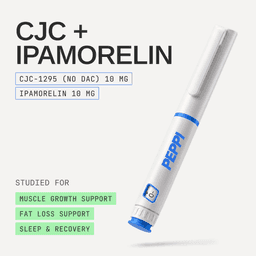
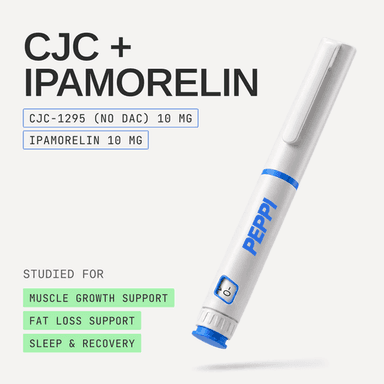
Peppi's CJC + Ipamorelin pen also targets growth-hormone signaling instead of supplying the hormone. It holds CJC-1295 (no DAC) 10 mg and ipamorelin 10 mg, and Peppi describes it as designed to support muscle development, body composition, sleep and recovery.
Is HGH a peptide
A peptide at protein size
Is HGH a peptide? Technically, yes. Growth hormone is a polypeptide hormone, though at 191 amino acids it's long enough that its own FDA label calls it a protein.
A 2020 review in Archives of Endocrinology and Metabolism describes growth hormone as "a protein and/or 191-amino-acid polypeptide hormone synthesized by the pituitary gland." The somatropin label puts its molecular weight at 22,124 daltons.
Peppi's own definition is a useful yardstick. Peptides are short chains of amino acids, typically 2 to 50 in length, that the body uses as signaling molecules.
- Tesamorelin: 44 amino acids, about 5,136 daltons
- HGH (somatropin): 191 amino acids, 22,124 daltons
- A typical peptide, by Peppi's definition: 2 to 50 amino acids
Tesamorelin fits inside that range, and HGH sits far past it.
Tesamorelin results vs HGH benefits
What the trials measured
Tesamorelin results come mostly from adults with HIV, where it lowered deep belly fat. The HGH benefits on its label come from adults with growth hormone deficiency, where it replaces a missing hormone.
| Feature | Tesamorelin | HGH (somatropin) |
|---|---|---|
| Main study group | Adults with HIV and excess abdominal fat | Adults with growth hormone deficiency |
| Trials on the label | Two 26‑week trials, 412 and 404 patients | Six trials, 172 adults, 6 months double‑blind |
| Body fat | Visceral fat down 15.4% vs placebo, pooled | Total body fat and waist size down vs placebo |
| Lean mass | Lean body mass up 1.2 to 1.3 kg | Lean body mass up vs placebo |
| Longer term | Visceral fat returned after stopping | Body composition changes held with continued treatment |
The tesamorelin figures come from the same two trials, reported on the label and in the review. Pooled across both, visceral fat dropped 15.4% over 26 weeks relative to placebo. Patients switched to placebo after 26 weeks saw visceral fat return to near baseline.
Growth hormone itself has been tested for the same HIV-related belly fat. In one 12-week trial cited in the review, daily HGH at doses above the body's normal range cut visceral fat 8.6% compared with placebo. Those doses came with swelling, joint pain and higher blood sugar, which the review blames on steady high hormone levels instead of natural pulses.
None of these numbers predicts what happens in your body. The Egrifta WR label says tesamorelin isn't indicated for weight loss management because it has a weight-neutral effect. The review adds that tesamorelin users were still more likely than placebo users to have IGF-1 above the normal range and to develop diabetes.
Why Peppi prescribes a GHRH peptide
Working with your pituitary
Peppi prescribes tesamorelin and doesn't offer HGH. Its site describes tesamorelin as a growth-hormone-releasing peptide designed to support visceral fat reduction, lean body composition and metabolic health.
Calling tesamorelin an HGH peptide is a shortcut. It doesn't add growth hormone from outside. It works through the pituitary's own pulsed release, the pattern described in section 12 of its label.
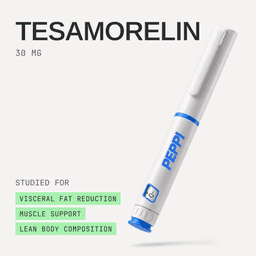
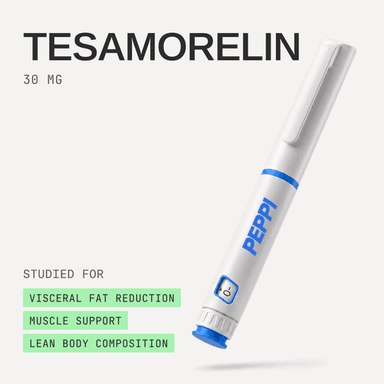
Peppi's tesamorelin peptide pen holds 30 mg of tesamorelin as a pre-filled, one-month supply. A twist-to-dose selector replaces mixing from vials, a named U.S. pharmacy dispenses it, and a licensed clinician reviews your intake and personalizes your dose first.
Featured pen
Tesamorelin
30 mg of tesamorelin in a twist-to-dose pen, refilled every 28 days, with unlimited video calls and messaging with your care team.
Daniel M., a verified buyer, put it this way: “I had been doing the right things but still wasn’t seeing much change around my waist. My friend recommended Tesamorelin from Peppi and I noticed my clothes started fitting better and I could actually see the progress. Having a clinician check in made it feel a lot more legit than things I’d tried before.”
Peppi notes that peptide therapy is cumulative and recommends committing 4 to 6 months for results to build. If you're still matching goals to a pen, Peppi's peptide goal quiz takes under 2 minutes, and you get a 100% refund if your prescription is not approved.
Not sure if tesamorelin fits your goals?
Take the QuizQuestions about tesamorelin & HGH
Frequently asked questions
Short answers on how the two compare and whether they mix.
Is Tesamorelin Better Than HGH?
They do different jobs, so the answer depends on the goal. HGH (somatropin) replaces growth hormone and is approved for growth hormone deficiency and a few growth conditions. Tesamorelin prompts your pituitary to release its own, and brand Egrifta is approved to reduce excess abdominal fat in adults with HIV-associated lipodystrophy. In those trials, visceral fat fell 15.4% versus placebo over 26 weeks. A clinician can weigh which, if either, fits your health history.
Does Tesamorelin Raise HGH Levels?
Yes. Its label says tesamorelin stimulates growth hormone secretion and then raises IGF-1 and IGFBP-3. In the label's two 26-week trials, average IGF-1 rose 107 and 108 ng/mL in the tesamorelin groups. It raises your own growth hormone instead of adding HGH, so it needs a working pituitary to act on.
Can You Take Tesamorelin With HGH?
That's a question for your clinician, not a combination to try on your own. Both raise growth hormone activity, and both labels warn about fluid retention and changes in blood sugar. Tesamorelin's label also tells prescribers to monitor IGF-1 and consider stopping treatment if it stays high. Peppi doesn't sell HGH, so tell the clinician reviewing your intake about any hormone you already take.
*These statements have not been evaluated by the Food and Drug Administration. Peppi peptides are dispensed only with a prescription.
Peptide guides from Peppi
Keep reading