Ipamorelin vs sermorelin at a glance
Same goal, different doors
The short version of ipamorelin vs sermorelin: both prompt your pituitary gland to release your own growth hormone, and each one uses a different receptor to do it. Neither one is growth hormone itself.
Peppi offers ipamorelin in its CJC + Ipamorelin pen, a ready-to-use, pre-filled pen that ships only after a clinician licensed in your state reviews your intake. Peppi doesn't sell sermorelin.
For a clinician-reviewed, pre-filled pen, Peppi offers ipamorelin in CJC + Ipamorelin
A clinician licensed in your state reviews your intake and decides whether the CJC + Ipamorelin pen is appropriate for you.
- Ipamorelin acts on the ghrelin receptor, sermorelin on the GHRH receptor
- Both raised growth hormone in small, short human studies
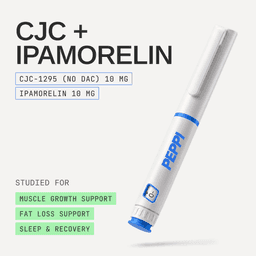
- Peppi's pen pairs ipamorelin with CJC‑1295 (no DAC), 10 mg of each
- Every batch is third‑party lab tested before it ships
of ipamorelin in each CJC + Ipamorelin pen
Sermorelin: not sold by Peppi
No published trial tests sermorelin vs ipamorelin head to head, so the table shows where each one stands on its own evidence.
| Feature | Ipamorelin | Sermorelin |
|---|---|---|
| What it is | A peptide of five amino acids | The first 29 amino acids of GHRH |
| Receptor | The ghrelin receptor | The GHRH receptor |
| Half-life | About 2 hours in a 1999 study of healthy men | About 4 minutes, per a 2026 review (a different measure) |
| Human studies | A 1999 study of 40 men and a 2014 hospital trial of 117 patients | A past pediatric approval, plus small, short studies in older men |
| FDA status | Not an FDA‑approved drug | Brand Geref was approved, then discontinued, with approvals withdrawn in 2009 |
| At Peppi | 10 mg in the CJC + Ipamorelin pen, never sold on its own | Not sold by Peppi |
| Peppi price | $379 one‑time, or 50% off your first month by subscription | Not applicable |
Quality matters as much as the molecule. Your lot number is printed on the pen label, and Peppi's batch test results show potency, sterility, pH and endotoxicity for that batch, tested by independent third-party labs.
What sermorelin is
The short form of GHRH
Sermorelin is an analog of growth hormone-releasing hormone (GHRH), the brain signal that tells your pituitary gland to release growth hormone. It is made of the first 29 amino acids of that signal.
A full answer to what is sermorelin includes its history as a drug. Under the brand name Geref it held two FDA approvals. The first, in 1990, was a test of how well the pituitary secretes growth hormone. The second, in 1997, covered children with idiopathic growth hormone deficiency and growth failure.
Geref's maker told FDA in 2008 that both products were being discontinued, and the approvals were withdrawn effective June 18, 2009. A 2013 Federal Register notice records FDA's finding that Geref was not pulled from sale for reasons of risk or effectiveness.
In adults, the sermorelin peptide has small, short studies behind it. In a 1992 National Institutes of Health study, 10 healthy older men injected it twice daily for 14 days. At the higher dose, growth hormone and IGF-1 rose to levels no longer significantly different from young men's.
A 1997 Johns Hopkins study followed 11 healthy men aged 64 to 76 with low IGF-1 through 6 weeks of nightly injections. Growth hormone release went up and two of six strength measures improved. IGF-1, weight and DEXA measures of muscle and fat stayed the same.
A 2006 sermorelin clinical review in Clinical Interventions in Aging, published as an editorial foreword, argued for sermorelin in aging adults. Its author wrote for a research society that was offering sermorelin to practitioners for study, and the piece reports no new trial data.
What ipamorelin is
Five amino acids, one job
Ipamorelin is a peptide of five amino acids that prompts growth hormone release through the ghrelin receptor, a different receptor from the one sermorelin uses.
The ipamorelin peptide was first described in 1998 by Novo Nordisk researchers, who called it the first selective growth hormone secretagogue. In pigs, it released growth hormone without raising ACTH or cortisol beyond what GHRH itself produced. Two older peptides in its class raised both.
Human data came a year later. In a 1999 study, 40 healthy men each received a 15-minute infusion at one of five dose levels. Growth hormone rose in a single episode at every level, peaked at about 40 minutes (0.67 hours) and then declined. Ipamorelin's half-life was about 2 hours.
A larger human trial asked a different question. A trial published in 2014 enrolled 117 adults having bowel surgery and gave them IV ipamorelin or placebo twice daily for up to 7 days in the hospital. Ipamorelin was well tolerated, and the trial's recovery measures did not differ significantly from placebo.
A 2026 review in Frontiers in Endocrinology sums up that record as phase I studies plus the surgery program, with no efficacy data yet in growth-hormone-related metabolic uses.
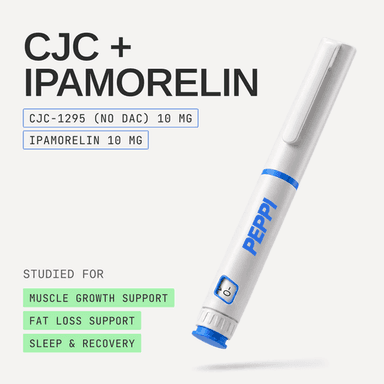
Peppi doesn't sell ipamorelin on its own. Peppi's ipamorelin peptide pen is the CJC + Ipamorelin pen, which Peppi's product page describes as two growth-hormone peptides in one pen, reaching the pituitary through two different receptors.
Featured pen
CJC + Ipamorelin
10 mg of CJC-1295 (no DAC) and 10 mg of ipamorelin in a ready-to-use, pre-filled pen with a twist-to-dose selector. One pen is a one-month supply.
Ipamorelin benefits vs sermorelin benefits
What the studies measured
In human studies, ipamorelin benefits and sermorelin benefits are both measured the same way: more of your own growth hormone released.
- Ipamorelin: growth hormone rose at all five dose levels in 40 healthy men (1999)
- Ipamorelin: no ACTH or cortisol rise beyond GHRH's in pigs (1998)
- Sermorelin: growth hormone and IGF-1 rose in 10 older men over 14 days (1992)
- Sermorelin: two of six strength measures improved in 11 older men, with no change in DEXA measures of muscle or fat (1997)
Those are hormone and lab results in small groups. Of the four, only the 1997 study reports body composition, and it found no change over 6 weeks.
Peppi lists its CJC + Ipamorelin pen as studied for muscle growth support, fat loss support, and sleep and recovery. A clinician weighs your goals and health history before prescribing.
One more line from that page belongs in your intake. Drugs that raise growth hormone can raise blood sugar, so tell your clinician about any blood sugar concerns.
Results take time. Peptide therapy is cumulative, and Peppi recommends committing 4 to 6 months for results to build.
Ipamorelin dosage vs sermorelin dosage
No label, no guesswork
Neither ipamorelin dosage nor sermorelin dosage has a current FDA label behind it, so there is no standard number to copy. With a Peppi pen, a clinician sets your dose and the pen removes the math.
Sermorelin dosage once had a label. Geref's two approvals covered a pituitary test and children with growth hormone deficiency. Neither covered treating adults, and both were withdrawn in 2009. FDA's drug database, checked on November 19, 2026, lists both Geref applications as discontinued and no other approved sermorelin product.
Ipamorelin dosage has no FDA label to quote. The same database lists no approved ipamorelin product. Its human studies gave it by infusion, to volunteers in a dosing study and to hospital patients after surgery, a different route from a pen injected under the skin.
- CJC + Ipamorelin pen: 10 mg of CJC-1295 (no DAC) and 10 mg of ipamorelin
- A licensed clinician personalizes your dose from your intake
- Twist-to-dose selector, with no reconstituting or mixing
- One pen is a one-month supply, refilled every 28 days
Peppi's product page says there is no established dose for healthy adults. Your clinician sets yours, and only your clinician changes it.
Sermorelin vs CJC-1295 & ipamorelin
A close relative, plus one
CJC-1295 (no DAC) is sermorelin's close relative. Peppi's product page describes it as the active 29 amino acids of GHRH with four swaps that resist breakdown, and the pen pairs it with ipamorelin.
That makes sermorelin vs CJC 1295 a comparison between an original sequence and a modified one. Both act on the GHRH receptor.
The difference in CJC 1295 ipamorelin vs sermorelin is one pathway against two. Sermorelin works through the GHRH receptor alone. Peppi's pen adds ipamorelin's ghrelin-receptor signal to a GHRH-type one.
CJC-1295 also exists in a long-acting form with DAC, an add-on that binds a blood protein. In a 2006 study of healthy adults, that form had a half-life of 5.8 to 8.1 days. Peppi's pen holds the no-DAC form, so those numbers don't carry over.
Research on the no-DAC form is still early, and Peppi's product page says so plainly: controlled evidence for this specific pairing in healthy people remains limited, so a clinician weighs your goals.
What the pen adds is the process around the peptide: a prescription, a licensed U.S. compounding pharmacy, a tested batch and a care team you can message.
Which growth hormone peptide to choose
Start with your goal
Choose the growth hormone peptide that matches your goal and comes with a prescription, a tested batch and a care team. At Peppi that means one of two pens.
CJC + Ipamorelin may fit if
- Muscle, body composition, sleep or recovery is your goal
- You want two growth hormone pathways in one pen
- You want a pre‑filled pen with no mixing
- You can commit 4 to 6 months, as Peppi recommends
Tesamorelin may fit if
- Visceral fat and lean body composition are your goals
- You want a peptide tested in randomized trials, run in adults with HIV
- You prefer a single peptide in your pen
You can only be prescribed one growth hormone peptide at a time, so Tesamorelin and CJC + Ipamorelin are never prescribed together.
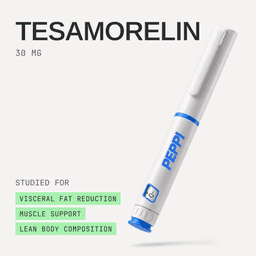
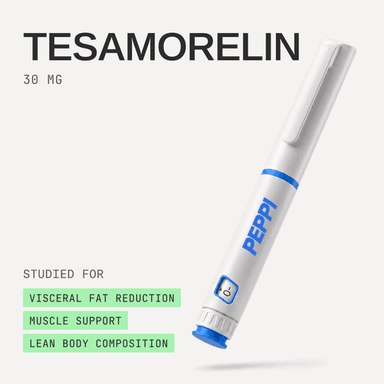
Peppi's Tesamorelin pen holds 30 mg of tesamorelin, a GHRH analog like sermorelin. Peppi describes it as designed to support visceral fat reduction, lean body composition and metabolic health. Its product page notes that research in otherwise healthy adults is limited.
Peppi's Tesamorelin and CJC + Ipamorelin pens are compounded prescription peptides and are not FDA-approved. The Tesamorelin pen is not the brand-name drug.
Still deciding? Peppi's peptide goal quiz matches your goals to a pen. A clinician licensed in your state then reviews your intake, in most cases within 24 hours. A consultation does not guarantee a prescription.
Not sure which growth hormone peptide fits your goals?
Take the QuizThe CJC + Ipamorelin pen is $379 one-time, or 50% off your first month by subscription. If your prescription isn't approved, you get a 100% refund.
Questions about ipamorelin & sermorelin
Frequently asked questions
Short answers on comparing, combining and timing.
Is Ipamorelin Better Than Sermorelin?
No published trial has compared them head to head, so neither can fairly be called better. A PubMed search on November 19, 2026 for both names returned six papers, all of them reviews. Both raised growth hormone in small human studies, through different receptors. Peppi offers ipamorelin in its CJC + Ipamorelin pen and doesn't sell sermorelin. A licensed clinician determines whether that pen is appropriate for you.
Can You Take Ipamorelin & Sermorelin Together?
That's a decision for a clinician, and Peppi doesn't sell sermorelin. No published study has tested the two together. Peppi's CJC + Ipamorelin pen already pairs ipamorelin with CJC-1295 (no DAC), a modified form of the same 29 amino acids sermorelin is made of. Your clinician decides what is appropriate for you.
Which Works Faster, Ipamorelin or Sermorelin?
No study has timed them against each other. In a 1999 study of 40 healthy men, growth hormone peaked about 40 minutes after an ipamorelin infusion began. In a 1992 study, 14 days of sermorelin raised growth hormone and IGF-1 in older men. Neither result is a timeline for muscle, fat or sleep. Peppi recommends committing 4 to 6 months for results to build, and your clinician tracks your progress.
These peptides are not FDA-approved and are dispensed only with a prescription.
Peptide guides from Peppi
Keep reading