Research on faster muscle recovery keeps pointing to four basics: protein and carbohydrate after training, enough sleep, easy movement on off days and a plan for soreness. A peptide is an add-on to those habits, not a stand-in. If you want to ask about one, Peppi's ready-to-use, pre-filled pens are prescribed only after a clinician licensed in your state reviews your intake, and every batch is third-party lab tested.
Each step below names its source and, where it matters, what that source did not test.
What you need for faster muscle recovery
Five inputs to start
- Protein at each mealAbout 20 to 40 grams of high‑quality protein per serving, the range sports nutrition researchers use.
- Carbohydrate to refuelHigh‑volume training drains glycogen, the carbohydrate stored in your muscles.
- SleepMost adults need 7 to 9 hours a night.
- Easy movementLow‑intensity exercise on off days, called active recovery.
- PatienceSoreness after an unfamiliar session tends to peak two to three days later.
Most muscle recovery tips come back to those five inputs.
How long does muscle recovery take? No single number fits every session. A 2018 narrative review of delayed onset muscle soreness (DOMS), the ache that follows unfamiliar or eccentric exercise, puts peak soreness at 48 to 72 hours after the workout. In its 2017 position stand on protein, the International Society of Sports Nutrition (ISSN) says the muscle-building effect of exercise lasts at least 24 hours, though it likely fades with time.
Planning muscle recovery starts with the calendar. The American College of Sports Medicine's 2011 position stand recommends resistance exercise for each major muscle group on 2 to 3 days a week. Two or three days out of seven leaves room for rest in between.
Steps to speed up muscle recovery
Eight steps, habits first
- Step 1.
Protein & carbs after training
Eat protein within two hours
If you want to know how to speed up muscle recovery, start with the meal after training. Resistance exercise and protein each stimulate muscle protein synthesis, and the ISSN's 2017 position stand on protein calls the two synergistic when protein is eaten before or after a session.
That stand's general guidance is 0.25 grams of high-quality protein per kilogram of body weight, or 20 to 40 grams, per serving, spread every 3 to 4 hours. A companion ISSN stand on nutrient timing, also from 2017, treats total daily protein as a primary emphasis. It adds that high-quality protein eaten up to 2 hours after exercise stimulates robust increases in muscle protein synthesis.
More is not always better. A 2018 British Journal of Sports Medicine meta-analysis pooled 49 trials and 1,863 healthy adults. Protein added to strength training increased strength and lean mass, with no further lean mass gain above about 1.6 grams per kilogram a day.
Carbohydrate refills glycogen. Speed matters most when you train again in under 4 hours. For that case, the timing stand suggests aggressive carbohydrate refeeding, or carbohydrate combined with protein.
Good to knowMany authors of the ISSN stands disclose funding from companies that sell protein supplements. The same stand says whole foods can cover your daily protein, which is step 2.
- Step 2.
Best foods for muscle recovery
Build meals from whole foods
No trial crowns a winner among the best foods for muscle recovery. What the ISSN protein stand does say is that athletes should consider focusing on whole food sources of protein that contain all of the essential amino acids, because those amino acids are required to stimulate muscle protein synthesis.
MedlinePlus, the National Library of Medicine's patient site, lists where amino acids are found. Animal sources include meats, milk, fish and eggs. Plant sources include soy, beans, legumes, nut butters and some grains, such as quinoa.
By the MedlinePlus count, each of these portions carries about 7 grams of protein:
- 1 ounce of meat, fish or poultry
- 1 large egg
- A quarter cup of tofu
- Half a cup of cooked beans or lentils
Reaching 20 to 40 grams takes three to six of those portions. Add a carbohydrate food to the plate to cover the refueling in step 1.
TipPer MedlinePlus, essential amino acids do not need to be eaten at every meal. The balance over the whole day is more important.
- Step 3.
Sleep as recovery time
Protect 7 to 9 hours
Sleep and muscle recovery get a blunt summary in a 2019 sleep hygiene for athletes review from the International Journal of Sports Medicine. Its authors screened 79 studies, reviewed 40 and reported clear negative effects of sleep deprivation on reaction time, accuracy, submaximal strength and endurance.
Most adults require 7 to 9 hours a night, the review says. It also flags its own limit: most of the studies were small, with 20 subjects or fewer.
Its sleep hygiene tables are practical. Get up at the same time every morning. Avoid caffeine after lunch. Keep any nap to an hour and not after 3 p.m. Avoid blue light from screens for at least 2 hours before bed, and keep the bedroom quiet, dark and a little cool.
TipThat review cautions that melatonin supplements are not FDA-regulated and vary in potency. Ask your clinician before adding one.
- Step 4.
Active recovery days
Move lightly on off days
Active recovery means low-intensity exercise after a hard session in place of full rest. In a 2018 Frontiers in Physiology meta-analysis of 99 studies, it reduced delayed onset muscle soreness across 8 experimental groups and 90 subjects.
Two limits came with that result. Perceived fatigue did not change, and the authors note the effect is significant only for a short period after exercise.
A 2003 Sports Medicine review reached a similar place: exercise is the most effective means of alleviating pain during DOMS, and the relief is temporary. If your question is how to recover faster from workouts when you train most days, that review's advice is specific. Reduce intensity and duration for 1 to 2 days after a session that leaves you very sore, or train less affected body parts instead.
- Step 5.
Ways to reduce muscle soreness
Pick methods with evidence
On how to reduce muscle soreness, that 2018 meta-analysis gives a ranked answer. Among single methods, massage had the largest effect on both soreness and perceived fatigue. Here is how the main methods it pooled came out:
Method Soreness Fatigue Massage Biggest drop Biggest drop Compression garments Drop Drop Active recovery Drop No change Water immersion Drop Drop Contrast water therapy Drop No change Cryotherapy Drop Not reported Stretching No change No change Electrostimulation No change No change Cold is less settled than the table suggests. The 2003 review concluded that cryotherapy and stretching had no effect on muscle soreness.
TipStretching did not reduce soreness in either review. The 2011 ACSM stand recommends it for a different reason: keeping joint range of movement.
- Step 6.
Muscle recovery supplements
Keep supplements in their place
Tart cherry and creatine are two muscle recovery supplements with human research behind them. A 2021 meta-analysis in the International Journal of Sport Nutrition and Exercise Metabolism combined 14 tart cherry studies. It found a small reduction in muscle soreness and a moderate benefit for recovery of muscular strength. Creatine kinase, a blood marker of muscle damage, showed no significant change.
On creatine, the ISSN's 2017 position stand says research has shown supplementation may enhance post-exercise recovery. One disclosure belongs next to that: the stand's lead author prepared it at the request of the Council for Responsible Nutrition and the ISSN, and several authors disclose grants or advisory roles with companies that sell creatine.
Protein powder is food in another form. The ISSN calls it a practical way of ensuring adequate protein, and says whole foods can meet the same need.
TipPeppi does not sell supplements. If you take one, tell your clinician.
- Step 7.
Peptides for recovery
Know what the research covers
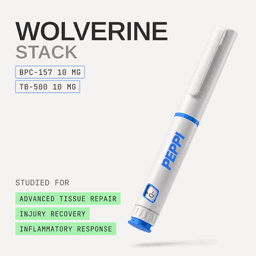
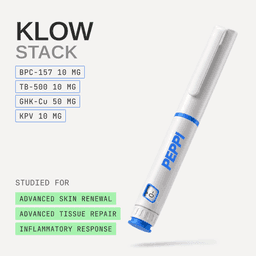
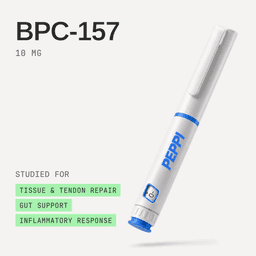
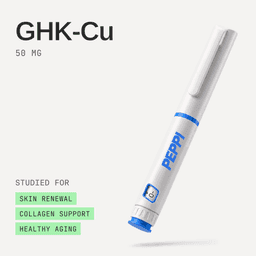
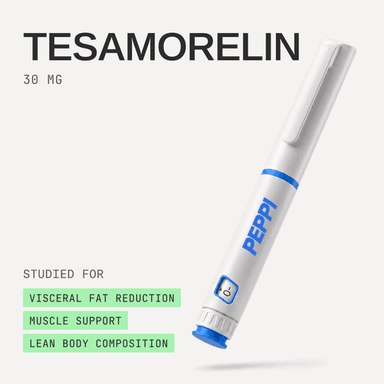
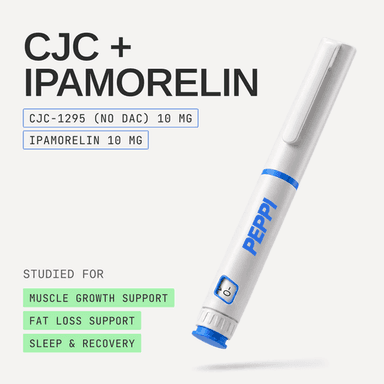
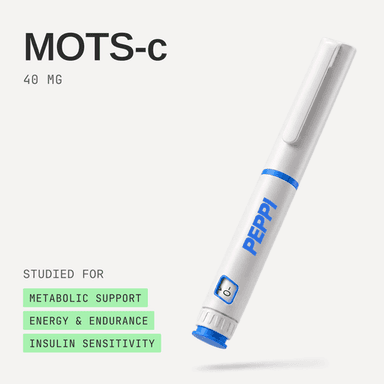
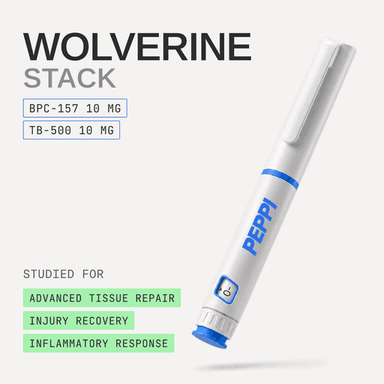
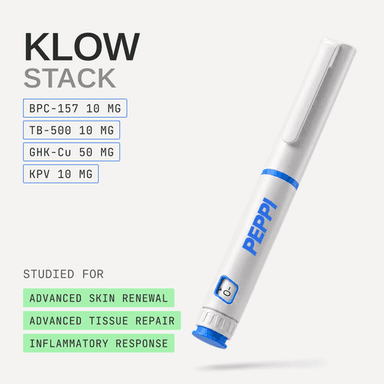
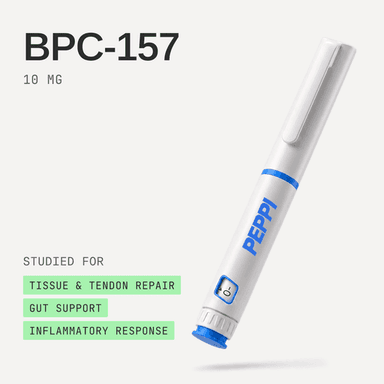
Peptides for recovery come after the six habits above, as an option a clinician weighs with you. Peppi lists three recovery pens, Wolverine, KLOW and BPC-157, and tags its CJC + Ipamorelin pen for sleep and recovery. Every Peppi pen is a compounded prescription peptide and is not FDA-approved.
BPC-157 is a lab-made peptide of 15 amino acids. A 2025 systematic review in HSS Journal found 36 studies of it relevant to sports medicine. Thirty-five were preclinical, and one was a retrospective clinical report on 12 patients. In the review's animal injury models, BPC-157 improved outcomes in muscle, tendon, ligament and bone injuries. No clinical data on side effects in people turned up.
Peppi's BPC-157 pen holds 10 mg. Its page lists anti-inflammatory support, gut support, and tissue and tendon repair as what the peptide is studied for.
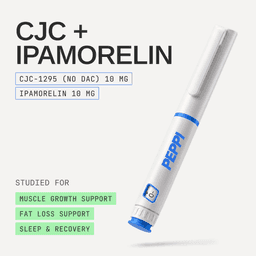
Growth hormone is the other route. Peppi's CJC + Ipamorelin pen holds 10 mg of CJC-1295 (no DAC) and 10 mg of ipamorelin, two peptides that reach the pituitary through two different receptors. Peppi's page states that the no-DAC form has no peer-reviewed human studies.
Soreness itself is untested ground. A PubMed search run for this post on November 19, 2026 paired BPC-157, TB-500, thymosin beta-4, CJC-1295 and ipamorelin with muscle soreness and post-exercise recovery terms. It returned no studies, so the decision sits with a clinician who knows your goals and history.
Compete in a tested sport? WADA's 2026 Prohibited List bans BPC-157 (section S0), CJC-1295 and ipamorelin (S2.2.4) and TB-500 (S2.3) at all times.
Not sure which recovery pen fits your goals?
Take the Quiz - Step 8.
The Wolverine stack
Two recovery peptides, one pen
The Wolverine stack is BPC-157 and TB-500 together. Peppi's Wolverine stack pen holds 10 mg of each in one ready-to-use, pre-filled pen. Peppi lists it as studied for advanced tissue repair, injury recovery and anti-inflammatory support.
On evidence, Peppi's Wolverine page is direct: "No human trial has tested BPC-157 and TB-500 together." A clinician weighs that against your goals.
What the pen changes is the handling. There is no reconstituting or mixing, the pen has a twist-to-dose selector, and every dose gets a fresh needle. In most cases a licensed clinician reviews your information within 24 hours, determines whether treatment is appropriate and sets your dose.
Every batch is tested by independent labs for potency, sterility, pH and endotoxicity before it ships. You can look up Peppi's batch test results with the lot number printed on your pen label.
Jason B., a verified buyer, wrote: "I started Wolverine because I had a few nagging things that just weren't getting better. It wasn't some overnight change, but after a few weeks I felt less beat up and could train more consistently again. The pen was also way easier than I expected." That's one person's experience, and results vary.
A Wolverine pen sits on top of the food, sleep and movement steps above, never in place of them, and a clinician licensed in your state decides whether it fits.
Good to knowWolverine is $379 one-time, or $189 for the first month on a subscription, then $303 a month. Peptide therapy is cumulative, and Peppi recommends committing 4 to 6 months. If your prescription isn't approved, you get a 100% refund.
Muscle recovery questions
Three common questions
How Long Does Muscle Recovery Take?
It depends on the session and on you. In a 2018 narrative review, soreness after unfamiliar or eccentric exercise peaked 48 to 72 hours after the workout. The ISSN's 2017 protein position stand says the muscle-building effect of exercise lasts at least 24 hours, though it likely fades with time. The American College of Sports Medicine recommends resistance exercise for each major muscle group on 2 to 3 days a week, which leaves rest days between sessions.
Should You Train Sore Muscles?
Usually yes, with a lighter load. A 2003 Sports Medicine review called exercise the most effective means of alleviating pain during delayed onset muscle soreness, though the relief is temporary. For people who train daily, it advised reducing intensity and duration for 1 to 2 days after a hard session, or working less affected body parts. It also warned that returning to sport too early may raise the risk of further injury.
Does Sleep Affect Muscle Recovery?
Yes. In a 2021 randomized crossover study of 13 healthy young adults, one night without sleep lowered muscle protein synthesis by 18%, raised cortisol by 21% and lowered testosterone by 24%. A 2019 review of 40 studies on sleep and athletic performance reported clear negative effects of sleep deprivation on submaximal strength and endurance. Most adults need 7 to 9 hours a night, that review says.
These peptides are not FDA-approved and are dispensed only with a prescription.
Peptide guides from Peppi
Keep reading