Visceral fat sits deep inside your belly, wrapped around organs like your liver and intestines. You can't see it in the mirror, but you can shrink it, and the habits that do it best are the ones with the most human research behind them.
This guide walks through how to measure it, the exercise, food, drink and sleep changes that move it, and where tesamorelin, a prescription peptide studied for visceral fat, fits in.
What you need to know about visceral fat
The fat around your organs
- It surrounds your organsIt lines your abdominal wall and wraps around your liver, intestines, kidneys and stomach.
- Some of it is normalIt cushions your organs. Too much is linked to a higher risk of cardiovascular disease.
- It responds to hormonesIts fat cells react to hormone signals, including the stress hormone cortisol.
- A tape measure tracks itYou can't see or feel it, so body shape and measurements are your best guide.
- It can come offCleveland Clinic says it's actually easier to lose than subcutaneous fat.
So what is visceral fat, exactly? It's body fat stored deep inside your abdomen, as opposed to subcutaneous fat, the layer just under your skin. According to Cleveland Clinic on deep belly fat, belly fat includes both kinds, and visceral fat is sometimes called "active fat" because it plays an active role in how your body works.
The visceral fat vs subcutaneous fat difference matters most for health risk. Having some visceral fat is healthy, but research links too much of it to cardiovascular disease, and its fat cells are sensitive to the hormones that control how your body stores and uses fat.
What causes visceral fat? Genetics shape how much you carry and where it sits. Your habits count too. Cleveland Clinic says eating fatty foods and sugars can make your body form more of it, too little activity leaves extra in storage, and cortisol, the stress hormone, makes your body add to its store.
A few medical conditions also change visceral fat, including lipodystrophy, Cushing syndrome and hypothyroidism. If your waist changes quickly without a clear reason, raise it with your doctor.
Steps to reduce visceral fat
Move, eat, sleep, then ask
- Step 1.
Measure your waist first
Get a baseline with a tape
If you want to know how to lose visceral fat, start with a number you can track. Since you can't see or feel this fat, Cleveland Clinic calls your body shape and measurements the best indicators of how much you have and whether it's changing.
Wrap a tape measure around your waist just above your hip bones. A waist of 35 inches or more in women, or 40 inches or more in men, signals a higher risk of health problems tied to visceral fat.
Waist-to-height ratio is a second check. Your waist should be no more than half your height, so someone who is 5 feet 10 inches tall (70 inches) would want a waist of 35 inches or less.
TipMeasure at the same spot each time and write the number down, so you can compare month to month instead of guessing.
- Step 2.
Exercise for visceral fat
Make aerobic exercise the base
When people ask how to reduce visceral fat, aerobic exercise has the strongest evidence. A 2013 meta-analysis of 15 exercise trials with 852 people found that aerobic training of moderate or high intensity had the highest potential to reduce visceral fat in overweight men and women, even without a calorie-cutting diet.
Brisk walking, cycling, jogging and swimming all count as aerobic exercise for visceral fat. The authors saw benefits even in programs as short as 12 weeks.
Staying active is linked to slower gain over the years, too. In a 5-year observational study of 1,114 African American and Hispanic adults, moderately active people gained visceral fat 7.4% more slowly than less active people.
Cleveland Clinic suggests at least 30 minutes of exercise a day, five days a week. High-intensity interval training is a popular option if you prefer shorter, harder sessions.
Good to knowIf you have a heart condition or joint problems, or you haven't exercised in a while, check with your doctor before you ramp up.
- Step 3.
Strength training to keep muscle
Lift to protect lean mass
Strength training does a different job. A 2012 meta-analysis of 35 randomized trials found that aerobic exercise reduced visceral fat compared with no exercise, but resistance training on its own didn't show a significant effect.
Lifting still earns its place. In the 8-month STRRIDE AT/RT trial of 119 sedentary adults with overweight or obesity, the aerobic groups lost more fat mass, while the groups that lifted gained more lean body mass. The authors concluded that a program including resistance training is needed to increase lean mass.
U.S. activity guidelines call for muscle-strengthening activity, like lifting weights or doing push-ups, at least 2 days each week. Add it to your cardio instead of trading one for the other.
- Step 4.
Foods that burn visceral fat
Eat more fiber & whole grains
No single food burns fat on its own, so read any list of foods that burn visceral fat with care. What the research supports is an eating pattern with more soluble fiber and whole grains and fewer refined grains.
In the same 5-year study, each 10 gram increase in soluble fiber was linked to a 3.7% slower rate of visceral fat gain, independent of changes in BMI. Soluble fiber is found in oat bran, barley, nuts, seeds, beans, lentils, peas and some fruits and vegetables.
Grains show a similar split. In a Framingham Heart Study analysis of 2,834 adults, people who ate the most whole grains had less visceral fat, while higher refined-grain intake went with more.
Both studies are observational, so they show links, not proof. For a full eating pattern, Cleveland Clinic names the Mediterranean and DASH diets as examples.
- Step 5.
Cut alcohol & added sugar
Drink less sugar & alcohol
Sugary drinks are one of the clearest targets. In a Framingham study, 1,003 adults had CT scans about 6 years apart. Visceral fat grew by about 852 cubic centimeters in people who drank sugar-sweetened beverages daily, compared with 658 in people who rarely or never did, after adjusting for weight change. Diet soda showed no such link.
Heavy drinking shows up too. In a Framingham analysis of 2,926 adults, men who had more than 14 drinks a week carried more visceral fat than men who drank less. Women who had more than 7 drinks a week didn't show a significant difference. Both drink studies are observational, so they show links, not proof.
Cleveland Clinic adds that alcohol has a lot of empty calories, and too much can strain your liver, which also processes fat so your body can use it.
TipSwapping a daily soda for water, sparkling water or unsweetened tea is one of the simplest changes on this list.
- Step 6.
Sleep & stress
Protect your sleep window
Sleep belongs in any visceral fat plan. In a 5-year study of 1,107 African American and Hispanic adults, people under 40 who slept 5 hours or less gained more visceral fat than those who slept 6 to 7 hours. Sleeping 8 hours or more was linked to more gain too, and neither link showed up in people over 40. It's one observational study, so it shows a link, not proof.
Experts recommend that adults sleep between 7 and 9 hours a night, according to the National Heart, Lung, and Blood Institute at the NIH.
Stress works through cortisol. Your body makes more of it when you're stressed, and Cleveland Clinic notes that cortisol makes your body add to its store of visceral fat. A regular bedtime and a daily walk are simple places to start on both.
- Step 7.
Tesamorelin for visceral fat
Ask a clinician about tesamorelin
Tesamorelin for visceral fat has more human trial data behind it than most peptides. It's a synthetic analog of growth hormone-releasing factor, the signal that prompts your pituitary to release growth hormone. The brand formulation, Egrifta WR, is FDA-approved only to reduce excess abdominal fat in HIV-infected adults with lipodystrophy.
Most tesamorelin results come from that group. In a 2007 New England Journal of Medicine trial, 412 people with HIV and excess belly fat took tesamorelin or a placebo daily for 26 weeks. Visceral fat fell 15.2% on tesamorelin and rose 5.0% on placebo.
Outside HIV, a 2012 trial in 60 adults with abdominal obesity and reduced growth hormone output found less visceral fat after 12 months on tesamorelin than on placebo. Abdominal fat under the skin didn't change significantly.
Tesamorelin benefits have limits. The Egrifta WR prescribing information says it isn't indicated for weight loss management because it has a weight-neutral effect. It raises IGF-1, can cause glucose intolerance, and lists joint pain, swelling, muscle pain and injection site redness or itching among its most common side effects.
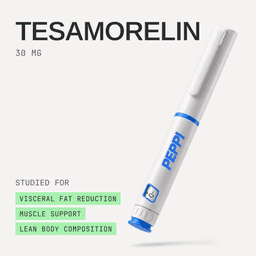
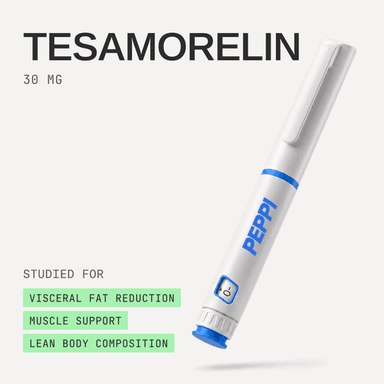
Peppi's Tesamorelin peptide pen holds 30 mg of tesamorelin. It isn't Egrifta, and like every Peppi pen it isn't FDA-approved. A licensed clinician reviews your intake and sets your dose, which you select with the pen's twist-to-dose selector. Each pen is a one-month supply refilled every 28 days, and because peptide therapy is cumulative, Peppi recommends committing 4 to 6 months.
Daniel M., a verified buyer, described his experience this way: "I had been doing the right things but still wasn't seeing much change around my waist. My friend recommended Tesamorelin from Peppi and I noticed my clothes started fitting better and I could actually see the progress. Having a clinician check in made it feel a lot more legit than things I'd tried before." That's one person's experience, and results vary.
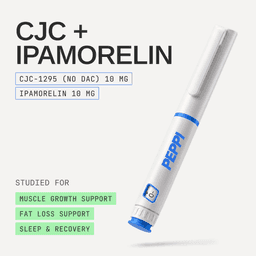
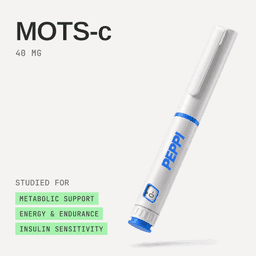
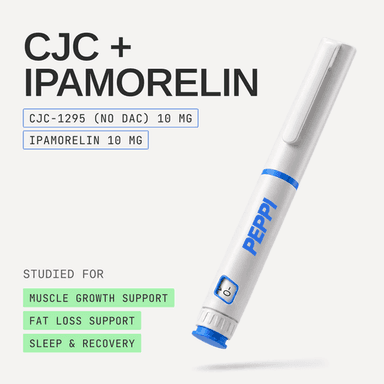
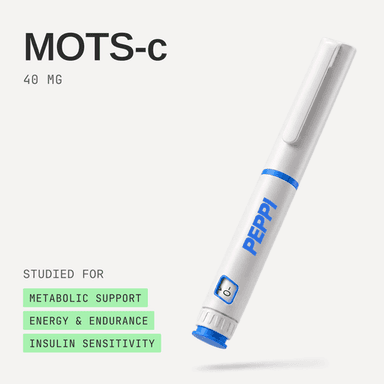
Two other pens often come up in the same conversation. Peppi's MOTS-c pen holds a mitochondrial peptide whose metabolism research so far is mostly in mice. The CJC + Ipamorelin pen is designed to support muscle development, sleep and recovery. You can only be prescribed one growth hormone peptide at a time, so tesamorelin and CJC + Ipamorelin are never prescribed together. Your clinician can help you decide which, if any, fits your goals.
TipThe Tesamorelin pen is $224 for the first month on a subscription, then $359 every 28 days. You get a 100% refund if your prescription is not approved.
Visceral fat questions
Frequently asked questions
Not sure which pen fits your goals? Peppi's peptide goal quiz asks a few questions and points you to a place to start.
How Long Does It Take to Lose Visceral Fat?
Cleveland Clinic says that if you stay active and manage what you eat, you can start to see fat loss in two to three months. Exercise research lines up with that: a 2013 meta-analysis found aerobic programs as short as 12 weeks could reduce visceral fat. Tesamorelin's main trials ran 26 weeks, and Peppi's Tesamorelin page says waist and body composition changes may become easier to measure in months 2 to 3.
Is Visceral Fat Worse Than Subcutaneous Fat?
For metabolic health, it usually is. In a Framingham study of 3,001 adults, both kinds of belly fat were linked to blood pressure, fasting blood sugar, triglycerides and HDL cholesterol, but visceral fat was more strongly tied to most of those risk factors, even after accounting for BMI and waist size. The upside is that Cleveland Clinic calls visceral fat easier to lose than subcutaneous fat.
What Are Typical Tesamorelin Results?
In two 26-week trials of adults with HIV-associated lipodystrophy, visceral fat fell 18% and 14% on average with tesamorelin, while placebo groups moved 2% or less, and body weight barely changed. When people switched to placebo afterward, visceral fat climbed 22% and 16% over the next 26 weeks. Results vary by person and aren't guaranteed.
*These statements have not been evaluated by the Food and Drug Administration. Peppi peptides are dispensed only with a prescription.
Peptide guides from Peppi
Keep reading