Your gut lining is built to repair itself. Cleveland Clinic says it is "designed to constantly repair and replenish itself," so healing a leaky gut mostly means finding what keeps wearing on the lining and easing off it.
This guide puts the habits and medical care first. The last section reports what the research on gut peptides, including BPC-157 and KPV, does and does not show. Peppi offers both in ready-to-use, pre-filled pens, and a clinician licensed in your state reviews every intake before anything ships.
What you need to know about leaky gut
The term & the science
- It is not a formal diagnosisCleveland Clinic calls leaky gut syndrome a hypothetical condition that is not currently recognized as a medical diagnosis.
- The lining itself is realA 2019 review in the journal Gut describes the intestinal barrier as surface mucus, a layer of epithelial cells and immune defenses.
- Every gut lets some things throughCleveland Clinic notes that everyone's gut is semi‑permeable, and that some people have more permeability than usual.
- No standard test existsCleveland Clinic says there is no standard test to measure intestinal permeability directly in patients.
Leaky gut is the popular name for increased intestinal permeability, a gut lining that lets more through than it should. The Cleveland Clinic gut syndrome overview separates two ideas. Increased permeability is a recognized feature of some inflammatory and autoimmune diseases, where it is usually considered a symptom. The theory that it causes disease by itself lacks evidence, the clinic says.
Leaky gut symptoms are harder to pin down than the name suggests. Cleveland Clinic states that there are no symptoms associated directly with intestinal permeability. What people notice comes from whatever injured the lining: diarrhea, painful indigestion, gas and bloating, or low energy.
What causes leaky gut? Cleveland Clinic's list includes chronic inflammatory conditions, chemotherapy and radiation, food allergies, and chronic overuse of alcohol or NSAIDs such as aspirin and ibuprofen. Diet and stress may wear on the lining over time, though the clinic says scientists aren't sure that leads to permeability.
Those causes shape how to heal leaky gut. The steps below start with the cause and move through the daily habits with human studies behind them. The peptide research comes last, reported for what it is.
Steps to heal leaky gut
Habits & care first
- Step 1.
Talk to a clinician about leaky gut symptoms
Find the cause first
Start with a doctor, because what helps depends on the cause. Cleveland Clinic states that the only known way to resolve a leaky gut is to treat the underlying condition behind it.
Ongoing diarrhea, painful indigestion and bloating overlap with many conditions. In the clinic's words, "A qualified gastroenterologist can help you sort through the possible causes of your specific symptoms."
Go in with notes on what you eat, how much you drink, which pain relievers you take and how you sleep. Each one is a step below.
- Step 2.
Follow a leaky gut diet
Cut sugar & fat, add fiber
A leaky gut diet is a pattern more than a menu: less sugar and fat, more fiber. Cleveland Clinic advises reducing dietary fats and sugars, which it says encourage the growth of the wrong kinds of gut bacteria, and eating a balanced diet.
Harvard Health describes the standard American diet as "low in fiber and high in sugar and saturated fats" and says emerging evidence suggests it may set off gut inflammation.
Fiber has a little direct data. In a 2018 study in the journal Nutrients, 32 adults with nonalcoholic fatty liver disease followed a six-month diet plan that raised their fiber intake from 19 to 29 grams a day. Blood levels of zonulin, a proposed marker of intestinal permeability, fell by nearly 90%. The group was small and was losing weight during the study, so fiber can't take all the credit.
One caution comes from the 2019 Gut review, written by a Mayo Clinic gastroenterologist. Public leaky gut advice, it says, "requires confirmation before endorsing dietary exclusions." Its own list of things that increase permeability includes emulsifiers, a type of food additive.
TipCleveland Clinic notes that a low FODMAP diet, used briefly, may give your gut a rest and help you spot food triggers. The clinic describes it as a brief measure.
- Step 3.
Foods for leaky gut
Feed the bacteria you want
Foods for leaky gut start with plants. Cleveland Clinic explains that prebiotics, which are usually plant fibers, are food for the good bacteria in your gut.
- Soluble fiber: MedlinePlus, from the National Library of Medicine, names oat bran, barley, nuts, seeds, beans, lentils and peas.
- Insoluble fiber: wheat bran, vegetables and whole grains, per MedlinePlus.
- Fermented foods: the 2019 Gut review lists yogurt, kefir, sauerkraut and kimchi among foods promoted online, and says such claims still need confirmation.
- Probiotics: Cleveland Clinic says they may help maintain the health of your gut lining.
Probiotic evidence is early. The Gut review calls the data on probiotics and barrier function sparse, often based on animal models.
TipMedlinePlus suggests adding fiber gradually over a few weeks. A large amount in a short time can cause gas, bloating and cramps.
- Step 4.
Cut back on alcohol & NSAIDs
Ease off two known irritants
Chronic overuse of alcohol or NSAIDs, such as aspirin and ibuprofen, is on Cleveland Clinic's list of causes. Both have been measured in people.
A 2017 review in the journal Alcohol Research describes chronic alcohol intake increasing the permeability of the intestinal lining. The lining can recover, too. In a 2012 Belgian study, 40 alcohol-dependent adults without cirrhosis entered a 3-week detox program. Their intestinal permeability was largely increased at the start and had recovered completely by the end.
NSAIDs have been tested directly. In a 2014 study in Gut, 23 healthy volunteers took the NSAID indomethacin as a comparison condition. A urine sugar test of small intestinal permeability read 0.071 afterward, against 0.030 on the control day.
Good to knowIf you take aspirin or another NSAID on a doctor's advice, raise it with that doctor before you change anything.
- Step 5.
Manage stress & sleep
Lower stress, guard your sleep
Acute stress raises gut permeability in people. In that 2014 Gut study, giving a public speech raised small intestinal permeability in healthy volunteers.
The detail matters. Permeability rose only in volunteers whose cortisol, a stress hormone, climbed during the speech. Anticipating electric shocks raised neither cortisol nor permeability.
Sleep has less to go on. In a 2019 study in the Journal of Pineal Research, sleep-deprived mice showed colon lining injury and lower expression of tight junction proteins, which hold neighboring gut cells together. No study cited in this guide tested sleep and the gut barrier in people, so count sleep as a sensible habit with mouse data behind it.
- Step 6.
Leaky gut supplements
Weigh supplements by the evidence
Leaky gut supplements come down to two names on Cleveland Clinic's page: vitamin D and the amino acid L-glutamine, which it says "may specifically help repair your gut lining."
Glutamine has one sizable trial. In a 2019 randomized, placebo-controlled trial in Gut, 106 adults completed 8 weeks on glutamine or placebo. All had developed diarrhea-predominant irritable bowel syndrome with increased intestinal permeability after a gut infection. Permeability normalized in the glutamine group and not in the placebo group.
The Gut review singles that trial out, then adds that most other studies are small, used different nutrients and require replication.
How long does it take to heal leaky gut? None of the sources in this guide gives one number. The studies in these steps ran on different clocks.
Study Permeability Time span Public speech, healthy adults It rose Same day, 2‑hour test Alcohol detox, 40 adults It recovered 3 weeks Glutamine trial, 106 adults It normalized 8 weeks Fiber diet, 32 adults Its marker fell 6 months Gut lining cells, pooled data Not measured About 3.5 days to renew Each row measured one group under one condition. None is a forecast for your gut.
Good to knowThe Gut review's caution covers this step too: public leaky gut advice needs confirmation before anyone endorses supplements to repair the damage.
- Step 7.
Peptides for gut health
Gut peptide research so far
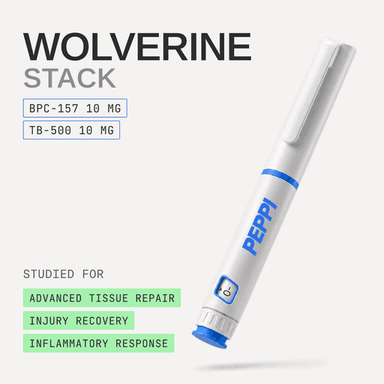
Peptides for gut health are a research topic, not a leaky gut treatment, and no peptide has been tested for leaky gut in people. Two of the most studied, BPC-157 and KPV, come in Peppi's ready-to-use, pre-filled pens. A clinician licensed in your state reviews your intake before anything ships.
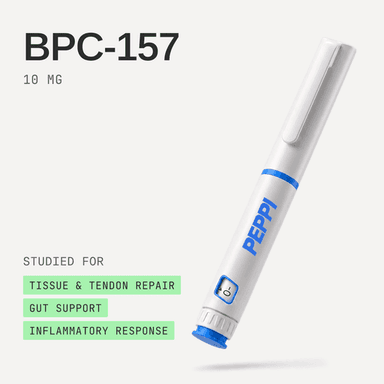
Peppi's product page describes BPC-157 as a lab-made peptide of 15 amino acids, based on a fragment of a protein first isolated from human gastric juice. Research on BPC 157 for gut health is mostly in rats, and no published human trial has tested it for intestinal permeability. In a 2013 study from the University of Zagreb, rats with chemically induced colitis recovered when given BPC-157, given by injection into the abdomen or in drinking water, and untreated rats did not during the study. A PubMed search in November 2026 pairing the peptide with leaky gut or intestinal permeability returned two papers, both reviews.
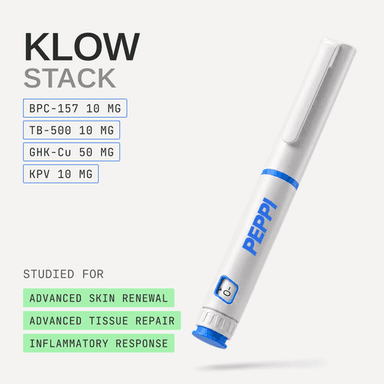
The KPV peptide benefits on Peppi's KLOW page come from a 2008 paper in Gastroenterology. In human intestinal cell lines, KPV inhibited inflammatory signaling. In mice with chemically induced colitis, KPV given in drinking water lowered the expression of pro-inflammatory signals. Peppi's page adds that KPV has "no published human trials yet."
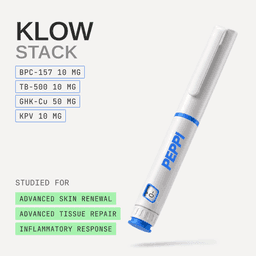
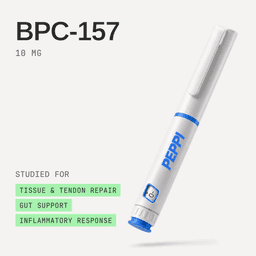
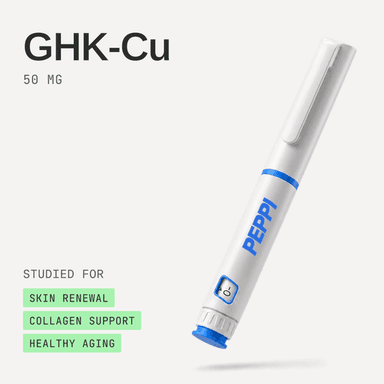
At Peppi, BPC-157 for gut health goals means the single-peptide pen. It holds 10 mg as a one-month supply, and Peppi lists it as studied for tissue and tendon repair, gut support and anti-inflammatory. Peppi's KLOW pen carries BPC-157, TB-500, GHK-Cu and KPV together. Peppi does not sell KPV alone.
Peppi's BPC-157 and KLOW pens are compounded prescription peptides and are not FDA-approved. The BPC-157 page says the peptide "has limited research in people," and no trial has tested the KLOW blend itself in people. A licensed clinician reviews your information and determines whether treatment is appropriate for you.
What Peppi adds is the part you can check. Each pen arrives pre-filled with a twist-to-dose selector, so there is no reconstituting or mixing. Independent labs test every batch for potency, sterility, pH and endotoxicity, and you can look up Peppi's batch test results by the lot number printed on your pen label.
Not sure which Peppi pen fits your goals?
Take the QuizGetting started takes under 2 minutes online. In most cases a licensed clinician reviews your information within 24 hours. If your prescription isn't approved, you get a 100% refund.
Good to knowPricing today: the BPC-157 pen is $299 one-time, or 50% off your first month by subscription. The KLOW pen is $449 one-time, with the same first-month offer. Peptide therapy is cumulative, and Peppi recommends committing 4 to 6 months.
Leaky gut questions
Three common questions
Questions about pens, dosing or prescriptions? The Peppi FAQs cover them.
How Long Does It Take to Heal Leaky Gut?
There is no set timeline, because it depends on the cause. Gut lining cells turn over quickly: a 2014 meta-analysis put human turnover at about 3.5 days. In a 2012 study of 40 alcohol-dependent adults, raised intestinal permeability recovered completely over a 3-week detox program. A 2019 glutamine trial ran 8 weeks. Your doctor can say what to expect in your case.
What Causes Leaky Gut?
Cleveland Clinic lists chronic inflammatory conditions, chemotherapy and radiation, food allergies, and chronic overuse of alcohol or NSAIDs such as aspirin and ibuprofen. A 2019 review in Gut adds endurance exercise, pregnancy and food emulsifiers as things that increase permeability. Diet and stress may wear on the lining too, though Cleveland Clinic says scientists aren't sure that leads to permeability.
Can Peptides Help Repair the Gut Lining?
No human study has shown that a peptide repairs the gut lining. BPC-157's gut research is mostly in rats, and KPV's is in human intestinal cell lines and mice, so neither is a proven leaky gut treatment. A licensed clinician reviews your intake and determines whether any peptide is appropriate for your goals.
These peptides are not FDA-approved and are dispensed only with a prescription.
Peptide guides from Peppi
Keep reading