
Copper peptides vs retinol at a glance
A vitamin & a peptide
Copper peptides vs retinol compares two different kinds of ingredient. Retinol is a form of vitamin A with randomized trials behind it. GHK-Cu, the copper peptide in Peppi's pens, has lab studies and a few small cream tests.
Peptides vs retinol here covers a third format too: Peppi offers GHK-Cu only as a prescription injection pen and sells no creams, serums or retinol.
They aren't rivals: retinol is a skincare ingredient, Peppi's GHK-Cu a prescription pen
A licensed clinician reviews your intake and decides whether a GHK-Cu pen is appropriate for you.
- Retinol has randomized trials, including a 24‑week trial in 36 adults
- GHK‑Cu's human skin results come from small cream tests, not injections
- Retinoids can irritate skin, generally in the first few weeks
- Peppi's GHK‑Cu pen is $149 for the first month on a subscription
of GHK-Cu in Peppi's pen
One-month supply
None of the sources cited here compares a copper peptide cream with over-the-counter retinol head to head. The table shows where each one stands today.
| Feature | Copper peptides (GHK-Cu) | Retinol |
|---|---|---|
| What it is | Three amino acids bound to copper, found in human plasma | A form of vitamin A, one of the retinoids |
| How it's sold | In creams and serums, or by prescription as an injection | Over the counter, in creams and serums |
| Human skin evidence | Small cream tests, two of them presented at a 2002 dermatology meeting, not published as full trials | Randomized trials, including a 24‑week trial in 36 adults |
| Collagen evidence | Lab studies, plus a 1998 pilot of a cream | More procollagen I in a 4‑person biopsy group of that trial |
| Irritation | No irritation trial in the sources cited here | Itching, burning, redness and peeling, generally in the first few weeks |
| What Peppi offers | KLOW, GLOW and GHK‑Cu pens, by prescription | Nothing. Peppi sells no retinol or skincare |
How retinol works on skin
Vitamin A, converted in skin
Retinol works by turning into retinoic acid inside your skin. Retinoic acid is the active form, and it is the same molecule as prescription tretinoin.
On retinoid vs retinol, the American Academy of Dermatology (AAD) describes retinoids as “a catch-all for an array of vitamin A-based products used on skin.” Retinol is one of them, sold over the counter.
A 2006 retinoids in skin aging review in Clinical Interventions in Aging lays out the trade-off. Retinol is about 20 times less potent than tretinoin, and skin has to convert it to retinoic acid before it acts. In sun-damaged skin, the review reports, retinol stimulates collagen synthesis and blunts the collagen-degrading enzymes that UV light switches on.
One trial shows the pattern in people. In a 2007 randomized, double-blind study in Archives of Dermatology, 36 adults with an average age of 87 had 0.4% retinol lotion applied to one arm and a plain lotion to the other for 24 weeks.
Fine wrinkling improved on the retinol arm. In the 4 people whose biopsies were stained for procollagen I, it rose compared with the plain lotion.
Irritation is the known cost. The 2006 review names the “retinoid reaction”: itching, burning where the product goes on, redness and peeling, generally within the first few weeks. It is more common with tretinoin than with retinol.
Retinoids can also make skin more sensitive to sun, the AAD notes. Its page adds one firm line: “Retinoids should not be used during pregnancy.”
How copper peptides work
A peptide your body makes
Copper peptides are short chains of amino acids bound to a copper ion. The one this post covers, and the one in Peppi's pens, is GHK-Cu: glycine, histidine and lysine holding copper.
Your body makes GHK. A 2020 University of Washington review puts plasma levels at about 200 ng/mL at age 20 and about 80 ng/mL by age 60.
In lab studies, GHK is tied to remodeling. A 2015 review in BioMed Research International reports that it stimulates both the synthesis and the breakdown of collagen and modulates the enzymes that control that turnover.
A 2018 review by two of the same authors adds elastin synthesis and support for dermal fibroblasts, the cells that build skin's framework. Both reviews come from researchers at a skincare company.
Most copper peptides benefits you'll see listed trace back to that lab work and to the small cream tests in the next section.
Every batch of Peppi's pens is third-party lab tested for potency, sterility, pH and endotoxins before it ships. You can look up Peppi's batch test results with the lot number printed on your pen label.
Copper peptides for skin & collagen
What the cream tests found
In people, copper peptides for skin have been tested mostly as creams. The results are encouraging and small, and two of them were presented at a 2002 dermatology meeting, not published as full trials.
The 2018 review, published in the International Journal of Molecular Sciences, summarizes them. In one, 71 women with mild to advanced signs of photoaging used a GHK-Cu facial cream for 12 weeks. Skin density and thickness increased, and laxity, fine lines and wrinkle depth were reduced.
In the other, 41 women used a GHK-Cu eye cream for 12 weeks, and it performed better than a placebo and a vitamin K cream. Both results come from the 2002 meeting proceedings, not from journal papers.
One pilot study put a copper peptide beside a retinoid. Described in the same review and dated 1998, it compared creams on women's thigh skin, among them GHK-Cu, vitamin C and retinoic acid. Collagen production improved in 70% of the women on GHK-Cu, 50% on vitamin C and 40% on retinoic acid.
Read that with care. It was a pilot, and the reviews don't give its size. The comparison was retinoic acid, the prescription form, not retinol. And the two reviews disagree on its length: one month in the 2015 paper, 12 weeks in the 2018 one.
So where do peptides for collagen stand next to retinol? Retinol has the randomized trials. GHK-Cu has lab evidence and small cream results.
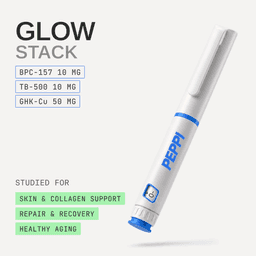
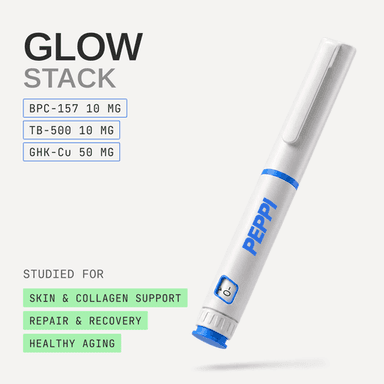
Peppi offers GHK-Cu in two blends as well. Peppi's GLOW pen holds 50 mg of GHK-Cu with 10 mg each of BPC-157 and TB-500, and Peppi lists it as studied for skin and collagen support. It's $189 for the first month on a subscription, then $303 a month.
Featured pen
GLOW
GLOW holds 10 mg of BPC-157, 10 mg of TB-500 and 50 mg of GHK-Cu in one ready-to-use, pre-filled pen. One pen is a one-month supply.
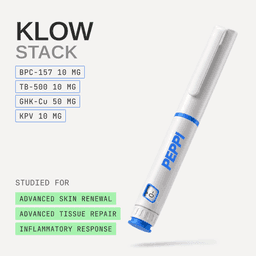
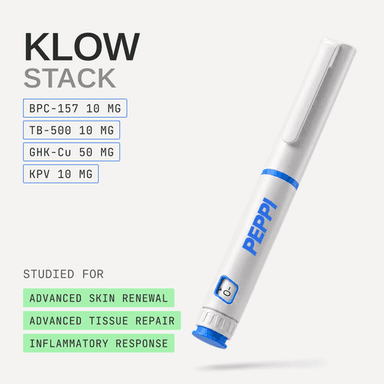
Peppi's KLOW pen adds 10 mg of KPV to those three. It's $224 for the first month on a subscription, then $359 a month. Peppi's product pages say Peppi found no published study testing GLOW's three peptides together, and that the KLOW blend has not been studied in people.
Using copper peptides & retinol together
No trial pairs them yet
Whether copper peptides and retinol work better together has not been tested in any trial found for this post. A PubMed search on November 16, 2026 for copper peptide terms with retinol, tretinoin or retinoid returned one paper.
That paper is a 2001 cell study in Archives of Facial Plastic Surgery. It treated separate cultures of skin fibroblasts with copper tripeptide or tretinoin and never combined the two.
That leaves rules for layering peptides and retinol without trial evidence in either direction. What is documented is how to ease into retinol on its own. A dermatologist quoted by the AAD tells patients to pick “the least-intense retinoid formula they can find” and to “use it every other night to start, slowly building up.”
A pen changes the question. Peppi's GHK-Cu is injected under the skin, so it isn't a step in your skincare routine. No study cited here pairs it with a retinol cream, so tell your clinician what you use on your skin, prescription retinoids included.
Not sure which Peppi pen fits your skin goals?
Take the QuizA retinol alternative for sensitive skin
When retinol isn't a fit
If retinol leaves your skin red and peeling, a retinol alternative is a fair thing to look for.
The AAD is plain about fit: “People who have skin allergies or dryness are probably not good candidates for a product that contains a retinoid.” A dermatologist it quotes adds that people with a lot of redness or inflammation in their skin should avoid retinoids.
Do copper peptides fill that gap? The cream tests above enrolled women with sun-damaged skin, not people chosen for sensitive skin. None of the sources cited here measured irritation from a copper peptide cream against retinol.
The closest thing to a tolerance statement comes from the authors of the 2015 review. They wrote that no issues had arisen during GHK's use as a skin cosmetic or in human wound healing studies. That is an author summary, not a trial result.
So on this evidence, copper peptides can't be called gentler than retinol. These sources report no retinoid-style reaction from copper peptide creams, and no trial that measured whether they irritate less.
An injection is a separate question again. Peppi's GHK-Cu page notes that “FDA says compounded injectable GHK-Cu may pose a risk of immune reactions.” A clinician reviews your health history before deciding whether a pen is appropriate for you.
A GHK-Cu pen may fit if
- Collagen support and skin glow are your goals
- You want a prescription a licensed clinician reviews
- You can commit 4 to 6 months, as Peppi recommends
Retinol fits if
- Your skin tolerates it, or you can build up slowly
- You want a cream backed by randomized trials
- You aren't pregnant, per the AAD's page
Topical copper peptides vs GHK-Cu injections
Same peptide, two routes
Topical copper peptides and injected GHK-Cu share a molecule but not an evidence base. Every human skin result in this post came from a cream. Human data on injections are limited.
- From creams: the 71-woman facial cream and 41-woman eye cream results, presented at a 2002 dermatology meeting, not published as full trials
- From creams: the 1998 thigh pilot against vitamin C and retinoic acid
- From the lab: collagen and elastin findings in cells
- From injections: no published trial has timed results, per Peppi's GHK-Cu page
GHK Cu topical products, meaning creams and serums, are where the human studies sit. Peppi doesn't sell them, or retinol, or any other skincare.
What Peppi offers is a GHK-Cu peptide injection in a ready-to-use, pre-filled pen. Its product page is direct about the evidence: research in people “is limited and mostly tested creams, not injections.” Peppi's KLOW, GLOW and GHK-Cu pens are compounded prescription peptides and are not FDA-approved.
Featured pen
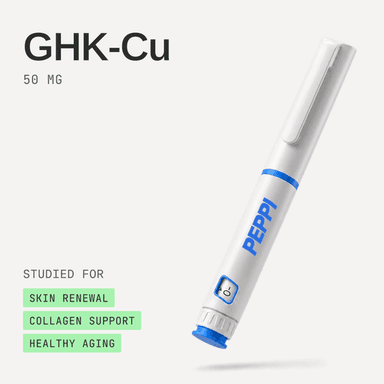
GHK-Cu
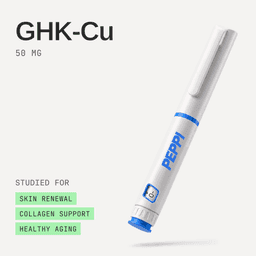
The GHK-Cu pen holds 50 mg of GHK-Cu in a ready-to-use, pre-filled pen with a twist-to-dose selector. One pen is a one-month supply.
Plans are on the page for the GHK-Cu peptide injection pen. It's $149 for the first month on a subscription, then $239 a month. A licensed clinician sets your dose from your intake, and refills come every 28 days.
Starting takes under 2 minutes online, and in most cases a licensed clinician reviews your intake within 24 hours. A consultation does not guarantee a prescription. If your prescription isn't approved, you get a 100% refund.
Questions about copper peptides & retinol
Frequently asked questions
Short answers on pairing, comparing and collagen.
Can You Use Copper Peptides & Retinol Together?
No trial found for this post tests the two together, so there is no evidence-based rule in either direction. A PubMed search on November 16, 2026 returned one paper on both, a 2001 cell study that tested each alone. Peppi's GHK-Cu comes as an injection pen, not a cream, so tell your clinician what you use on your skin.
Are Copper Peptides Better Than Retinol?
Against retinol itself, the sources cited here hold no head-to-head trial. Retinol has randomized trials behind it, while GHK-Cu's human skin results are small cream tests, two of them presented at a 2002 dermatology meeting, not published as full trials. A 1998 pilot, known only from review summaries and of unreported size, found collagen gains in more women on a GHK-Cu cream than on retinoic acid, the prescription form, not retinol. The two work differently.
Do Copper Peptides Build Collagen?
In lab studies, yes. A 2018 review reports that GHK increases collagen and elastin synthesis. In people the evidence is thinner: a 1998 pilot of a cream, plus cream results presented at a 2002 dermatology meeting, not published as full trials. Human data on injected GHK-Cu are limited, and a licensed clinician decides whether a pen is appropriate for you.
These peptides are not FDA-approved and are dispensed only with a prescription.
Peptide guides from Peppi
Keep reading