How peptides support hair growth
Follicle signals, early data
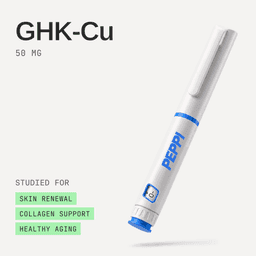
The best peptides for hair growth start with GHK-Cu, the copper peptide Peppi offers in a ready-to-use, pre-filled pen and inside its KLOW and GLOW blends. They're signaling molecules being studied for how they may support the skin and follicles that hair grows from.
Peptides are short chains of amino acids that bind to receptors on your cells and prompt processes your body already runs, such as tissue repair and collagen production. Interest in peptides for hair growth centers on the follicle and the scalp skin around it.
Evidence is the catch. Among the peptides for hair on this list, the studies cited here tested only GHK and its copper peptide relatives on human follicles or scalps. Those tests used a lab dish or a scalp spray, not an injection.
Quality is the part you can check. Independent labs test every Peppi batch before it ships, and you can look up Peppi's batch test results by the lot number printed on your pen label.
The short answer
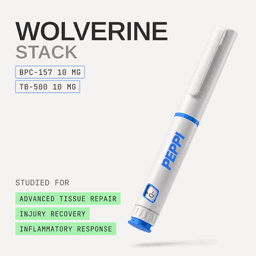
GHK-Cu leads because, in the studies cited here, GHK and its copper peptide relatives are the ones tested on human hair follicles or scalps, in a lab dish and one small spray trial. KLOW and GLOW carry the same 50 mg of GHK-Cu alongside other peptides. BPC-157's link to hair runs through skin research in rats, and TB-500's through hair studies of its parent peptide in rodents. Each Peppi option is a ready-to-use, pre-filled pen, and a licensed clinician reviews your intake before anything ships.
- Number 1.
GHK-Cu for hair growth
The copper peptide with hair data
$149
$299first monthStudied forSkin glow, collagen support & healthy aging
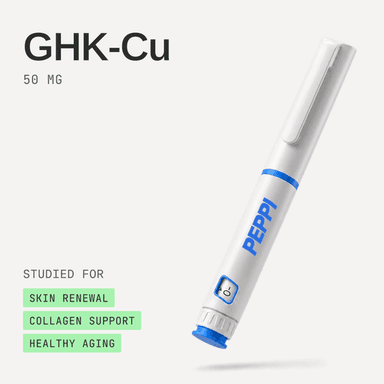
In the pen50 mg GHK‑Cu
Hair evidenceLab work & one small spray trial
Price$149 first month, then $239 a month
GHK-Cu opens this list because its family is the one with tests on human hair follicles in the studies this post cites. It's a natural copper tripeptide found in human plasma, and Peppi lists it as studied for skin glow, collagen support and healthy aging.
On GHK Cu for hair growth, a 2018 GHK copper gene data review lists increased hair growth and thickness, and larger hair follicles, among the peptide's reported effects. The review reports no hair trial in people, and its authors work in a skincare company's research department.
The closest human test among the studies this post cites is a 2016 randomized trial in Annals of Dermatology. For 6 months, 45 men with pattern hair loss used a scalp spray once a day: a placebo, or a compound joining GHK to 5-aminolevulinic acid at 100 or 50 mg/ml. Every group gained some hair by month 6, but only the 50 mg/ml spray beat placebo, and only at that last visit. Neither strength changed hair length or thickness more than placebo.
Read GHK Cu hair growth claims against that trial. It is one small trial, and it differs from Peppi's pen in three ways. The GHK was joined to 5-aminolevulinic acid. It carried no copper, so it wasn't GHK-Cu. And it was sprayed on, not injected. Peppi's GHK-Cu pen holds 50 mg as a one-month supply. Peppi's product page notes that research in people "is limited and mostly tested creams, not injections." It also notes that "FDA says compounded injectable GHK-Cu may pose a risk of immune reactions." A licensed clinician reviews your intake and determines whether it's appropriate for you.
- Its family has tests on human hair follicles
- Hair data so far: a lab dish & a scalp spray
- Your clinician sets the dose
- Number 2.
Copper peptides for hair
AHK-Cu & the topical family
Studied forHair follicle growth, in the lab
Form studiedLab dish & scalp spray
At PeppiGHK‑Cu comes in a pen, not a serum
Copper peptides for hair usually means serums and sprays, and the family is wider than GHK-Cu. A sister molecule, AHK-Cu, swaps one amino acid. The hair studies this post cites used a scalp spray and follicles in a lab dish, not an injection.
In a 2007 study in Archives of Pharmacal Research, AHK-Cu lengthened human hair follicles kept alive outside the body. It also increased the growth of dermal papilla cells, the specialized cells that drive follicle growth. That is a lab result on tissue in a dish. Getting through skin is a separate hurdle. A 2011 lab study in Inflammation Research applied a copper tripeptide to human skin samples in the lab and measured copper passing through over 48 hours. It measured penetration, not hair.
Peppi doesn't sell serums, sprays or any topical product.
Its copper peptide is GHK-Cu in a ready-to-use, pre-filled pen, available after a licensed clinician reviews your intake. Topical findings don't transfer directly to an injection, which is a fair point to raise with your care team.
 TryGHK-Cu$149
- Number 3.
GLOW peptide for scalp & skin
GHK-Cu plus two repair peptides
$189
$379first monthStudied forSkin & collagen support, repair & recovery
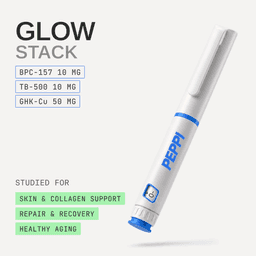
In the penBPC‑157 10 mg, TB‑500 10 mg, GHK‑Cu 50 mg
Hair evidenceFrom its parts, not the blend
Price$189 first month, then $303 a month
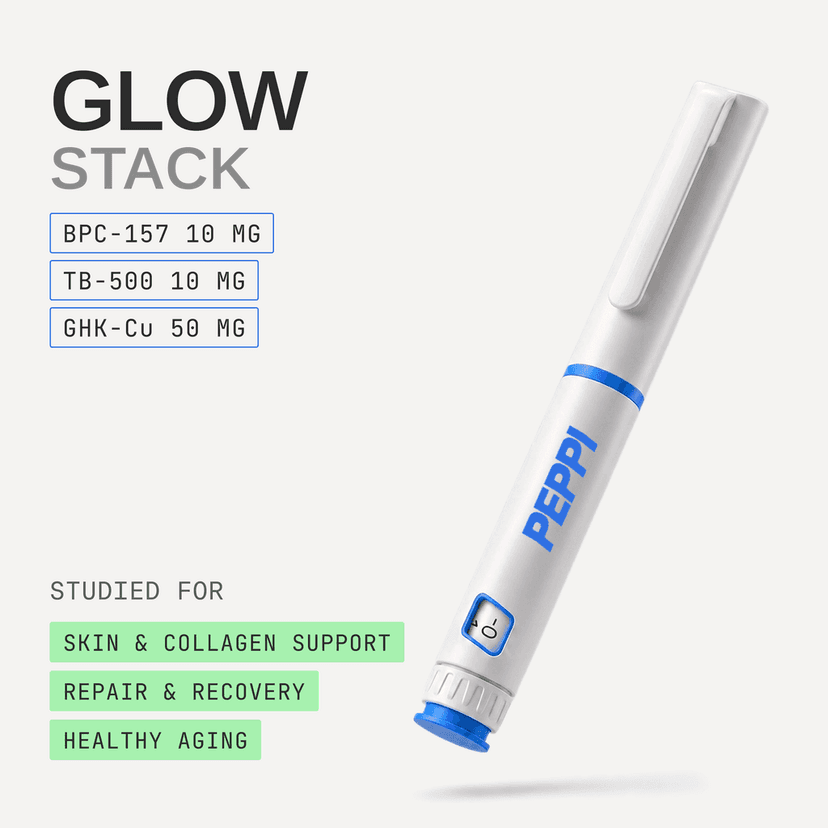
GLOW is the blend to look at if your goals run past hair to skin and recovery. Peppi built the GLOW peptide pen around the same 50 mg of GHK-Cu, then added 10 mg each of BPC-157 and TB-500.
On Peppi's GLOW page, the studied-for list reads skin and collagen support, repair and recovery, and healthy aging. Your scalp is skin, and that reasoned link, rather than a GLOW hair study, is why it sits on this list.
Peppi's product page is plain about the blend: "We found no published study testing the three peptides together." Read GLOW's hair angle as GHK-Cu's, with two recovery peptides alongside.
Peppi's quiz lists "Improve my skin, hair, or nails" among its goal choices, and a licensed clinician reviews your answers before anything ships.
- Same 50 mg of GHK‑Cu as the single pen
- Adds BPC‑157 & TB‑500 for recovery goals
- One pen, a one‑month supply
- Number 4.
KLOW for a calmer scalp
GLOW with KPV added
$224
$449first monthStudied forAdvanced skin glow, advanced tissue repair & anti‑inflammatory
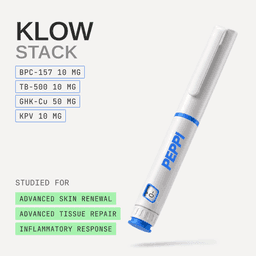
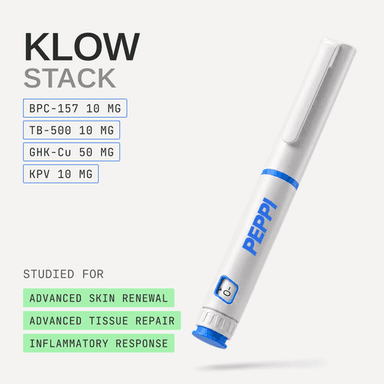
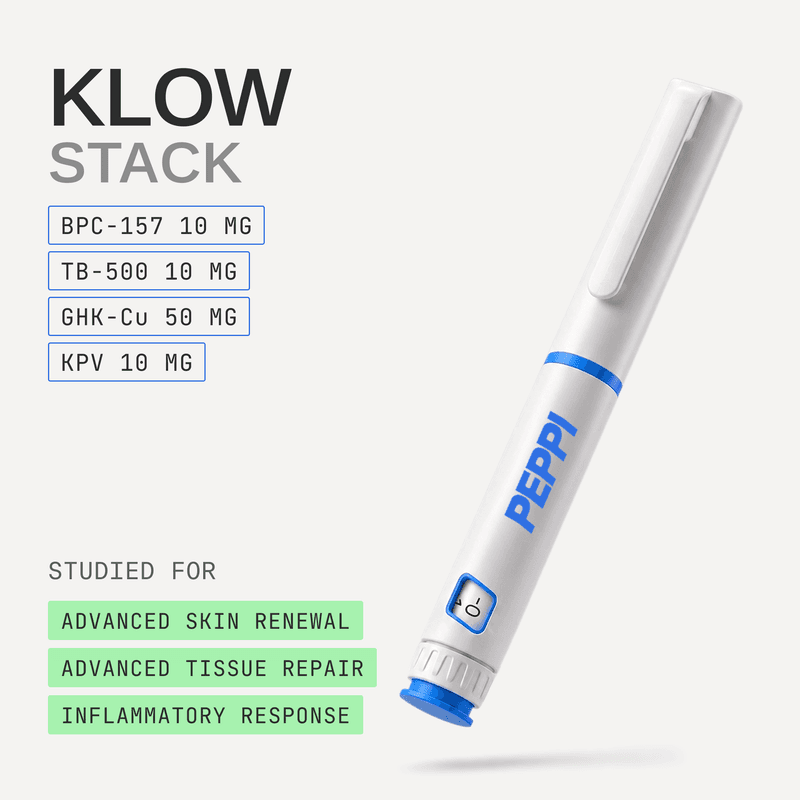
In the penBPC‑157 10 mg, TB‑500 10 mg, GHK‑Cu 50 mg, KPV 10 mg
Hair evidenceFrom its parts, not the blend
Price$224 first month, then $359 a month
KLOW is GLOW with a fourth peptide: KPV, which Peppi describes as "an anti-inflammatory tripeptide." Peppi's KLOW pen holds 10 mg of it alongside BPC-157, TB-500 and GHK-Cu.
The KPV peptide is the last three amino acids of alpha-MSH. In a 2008 Gastroenterology study, it inhibited inflammatory signaling in human cell lines, and given in drinking water it reduced colitis in mice. A calmer scalp is a reasonable thing to want, and inflammation is KPV's research area, but a PubMed search for this post found no KPV study on hair or scalp.
Peppi's page states that no trial has tested the KLOW blend itself in people. If your scalp is persistently itchy, flaky or sore, that's a question for a doctor before any peptide.
- Everything in GLOW, plus 10 mg of KPV
- KPV: studied for inflammation in cells & mice
- A clinician reviews every order
- Number 5.
BPC-157 & scalp healing
The recovery peptide people ask about
$149
$299first monthStudied forTissue & tendon repair, gut support & anti‑inflammatory
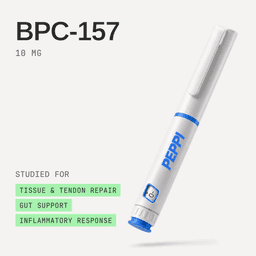
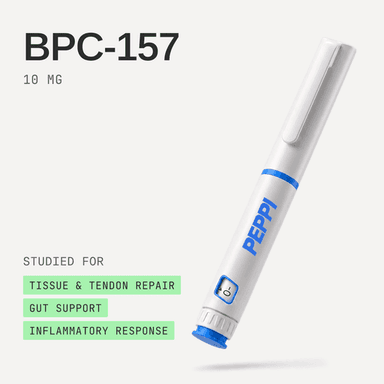
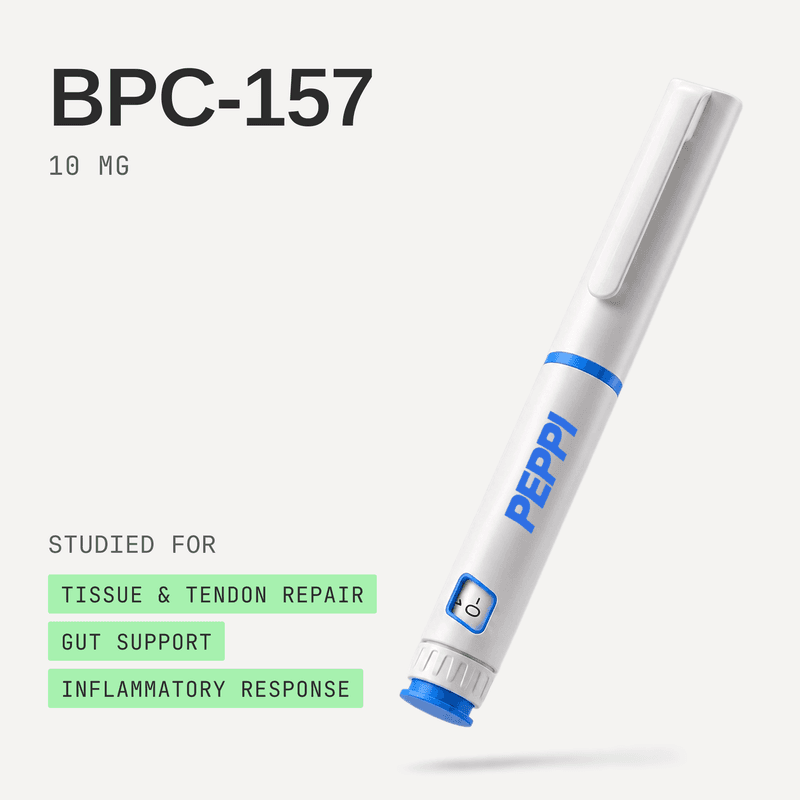
In the pen10 mg BPC‑157
Hair evidenceNo hair studies found
Price$149 first month, then $239 a month
BPC-157 is here because people ask about it for hair. A PubMed search for this post found no published study of BPC-157 and hair growth, so its place on a hair list rests on skin research.
Most BPC 157 benefits you'll read about come from animal injury models. A 2025 systematic review in HSS Journal looked at 36 BPC-157 studies from a sports medicine angle, and 35 of them were preclinical. One rat study shows the skin connection. In 2015, researchers applied BPC-157 to alkali burns on rat skin. Treated wounds closed faster and showed more collagen deposition than untreated ones. That is skin repair research in rats, a step removed from hair.
Peppi lists BPC-157 as studied for tissue and tendon repair, gut support and anti-inflammatory, and its pen holds 10 mg.
If hair is your main goal, the copper peptide pens above have more relevant research.
TB-500 & hair follicles
Inside GLOW & KLOW
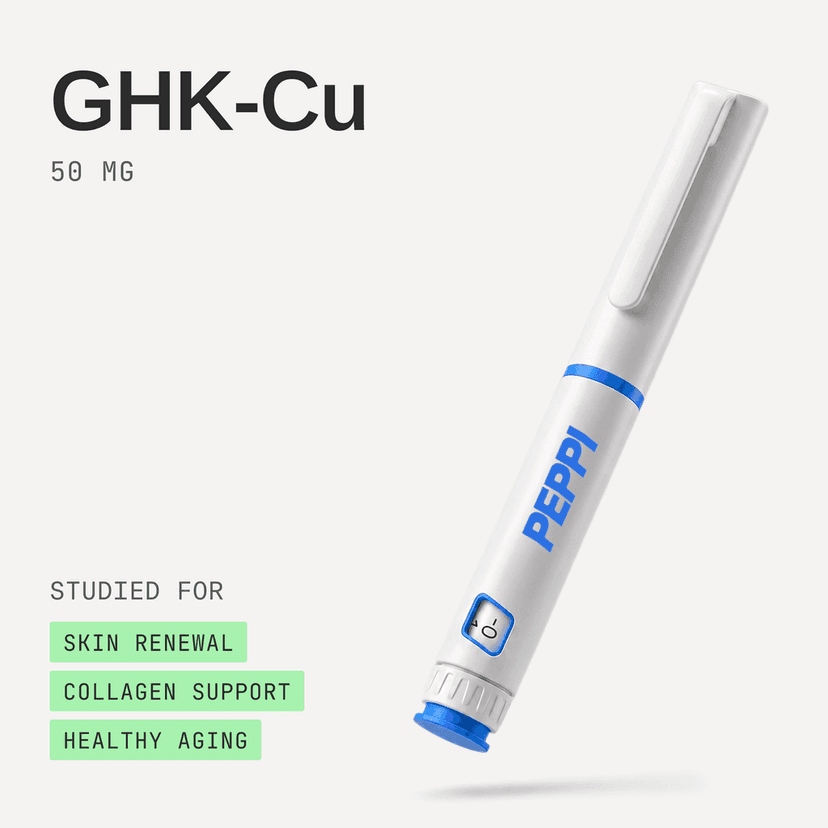
TB-500 sits outside the five numbered picks because its hair data comes from its parent peptide, thymosin beta-4, not from TB-500 itself. TB-500 is a lab-made copy of a seven-amino-acid stretch of thymosin beta-4, a 43-amino-acid peptide.
In a 2004 study in The FASEB Journal, thymosin beta-4 stimulated hair growth in normal rats and mice. In cells taken from rat whisker follicles, it increased the migration of stem-like cells.
That's where most TB500 benefits for hair come from: the full peptide, in rodents. The 2004 study did not test the shorter TB-500 fragment, and Peppi's product pages note that FDA has identified no human exposure data for TB-500.
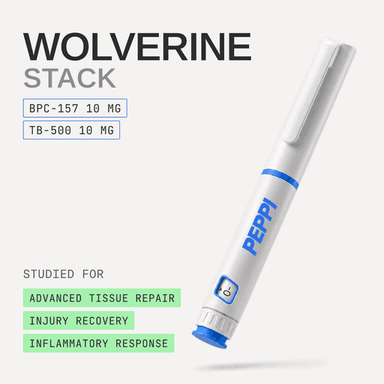
Peppi doesn't sell TB-500 alone. Each Wolverine, KLOW and GLOW pen holds 10 mg of it, always alongside BPC-157.
Peptides for hair loss vs minoxidil
Where each one fits
People weighing peptides for hair loss against minoxidil are comparing two different kinds of product. Topical minoxidil is an FDA-approved drug for pattern hair loss, according to a 2019 review in Drug Design, Development and Therapy.
MedlinePlus, from the National Library of Medicine, describes minoxidil as a liquid applied to the scalp. It says the drug must be used for at least 4 months, and possibly up to 1 year, before any effect shows.
| Feature | Topical minoxidil | Peppi peptide pens |
|---|---|---|
| FDA status | Approved for pattern hair loss | Not FDA‑approved |
| Human hair trials | Yes | None for these pens |
| Form | Liquid or foam on the scalp | Pre‑filled injection pen |
| Time to judge | At least 4 months, per MedlinePlus | No hair timeline studied |
| Offered by Peppi | No | Yes, by prescription |
Peppi does not offer minoxidil. Peppi's pens are compounded prescription peptides and are not FDA-approved, and none has been tested for hair loss. They are designed around goals like skin glow, collagen and recovery. If your hair is thinning, a dermatologist is the right person to find out why.
Not sure which pen fits your skin & hair goals?
Take the QuizIf a peptide is the route you want to explore, here is how Peppi's process works. The intake takes under 2 minutes, and a clinician licensed in your state reviews it, in most cases within 24 hours. If your prescription isn't approved, you get a 100% refund.
Featured pen
GLOW
BPC-157, TB-500 and 50 mg of GHK-Cu in one ready-to-use, pre-filled pen with a twist-to-dose selector. Your clinician sets the dose.
Questions about peptides for hair growth
Frequently asked questions
Does GHK-Cu Regrow Hair?
None of the studies this post cites tested GHK-Cu alone for hair regrowth in people. A related copper peptide, AHK-Cu, lengthened human hair follicles in a lab dish. In a small 2016 trial, men with pattern hair loss who used the lower of two strengths of a scalp spray containing a GHK compound gained more hair than the placebo group at 6 months. Neither study tested injected GHK-Cu.
Is Injectable or Topical GHK-Cu Better for Hair?
None of the studies this post cites compared the two, so neither is shown to be better for hair. The copper peptide hair studies this post cites used topical or lab methods: a scalp spray in one small trial and follicles in a dish in another. Peppi's GHK-Cu pen is injected under the skin, and Peppi's product page notes that research in people mostly tested creams, not injections.
How Long Do Peptides Take to Work for Hair?
Peppi's GHK-Cu page notes that no published trial has timed results for GHK-Cu injections. In the 2016 scalp spray trial of a GHK compound that this post cites, hair was measured at 1, 3 and 6 months, and the lower-strength spray pulled ahead of placebo only at 6 months. Peppi's general note for every pen, not a hair timeline, is that peptide therapy is cumulative, with 4 to 6 months recommended for results to build. Results vary.
These peptides are not FDA-approved and are dispensed only with a prescription.
Peptide guides from Peppi
Keep reading